


Wydawcy
Katalog tematyczny
- Archeologia (109)
- Ekonomia, finanse, business (13704)
- Filozofia (1445)
- Historia (3040)
- Języki i językoznawstwo (2356)
- Lifestyle, hobby i rozrywka (475)
- Medycyna (9704)
- Nauki humanistyczne (4)
- Nauki o Ziemi i środowisku (2638)
- Nauki ścisłe (20412)
- Astronomia (294)
- Biologia (5119)
- Chemia (6540)
- Chemia analityczna (361)
- Chemia fizyczna (346)
- Chemia nieorganiczna (137)
- Chemia organiczna (535)
- Krystalografia (27)
- Minerologia (46)
- Fizyka (3309)
- Matematyka (4574)
- Nauki ścisłe, ogólnie (503)
- Nauki społeczne (8486)
- Nauki techniczne (13450)
- Prawo (1696)
- Publikacje informacyjne i interdyscyplinarne (1288)
- Religia i wierzenia (917)
- Technika komputerowa (4067)
- Zdrowie, relacje międzyludzkie i rozwój osobisty (657)





Informacje szczegółowe o książce
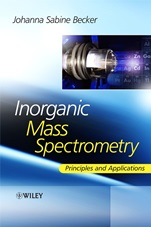
Inorganic Mass Spectrometry: Principles and Applications
ISBN 9780470012000
Autor: Sabine Becker
Wydawca: Wiley
Dostępność: 3-6 tygodni
Cena: 904,05 zł
Przed złożeniem zamówienia prosimy o kontakt mailowy celem potwierdzenia ceny.
ISBN13: |
9780470012000 |
ISBN10: |
0470012005 |
Autor: |
Sabine Becker |
Oprawa: |
Hardback |
Rok Wydania: |
2007-12-14 |
Ilość stron: |
514 |
Wymiary: |
253x181 |
Tematy: |
PN |
In organic mass spectrometry provides established analytical techniques to analyze know and unknown materials in respect to their elemental composition or species, to quantify the elemental concentration of major, minor and trace elements in any samples for the determination of the exact mass of isotopes and precise and accurate isotopic abundances or isotope ratios. Beginning with a historical overview of mass spectrometry, Inorganic Mass Spectrometry: Principles and Applications presents the fundamentals and instrumentation of the most important inorganic mass spectrometric techniques, describes a wide range of analytical methods and a multitude of applications.
This comprehensive work provides an insight into the state of the art of mass spectrometry in different challenging areas and recent developments and presents representative coverage of many topics. It is concerned with the most important types of mass spectrometers and presents an overview of new methodological developments and trends for analytical work and modern applications especially in survey, trace, ultratrace, surface (micro– and nanolocal analysis, imaging and depth profiling) and isotope analysis.
The first part of the book descries fundamentals of inorganic mass spectrometry (basic principles and developments of ion sources, ion separation systems and ion detectors) and instrumental developments in ICP–MS, LA–ICP–MS, GDMS, SIMS, TIMS and other mass spectrometric techniques. The second part focuses on a multitude of quite different applications including:Materials scienceEnvironmental Science and environmental controlBiologyBioengineeringMedicineFood analysisGeology and geochemistryCosmochemistry, planetary and space scienceDetermination of long–lived radionuclidesForensic applicationsThe study of cluster and polyatomic ion formation by mas
s spectrometry
Extensive appendices include a table of isotopic abundances, atomic mass and ionization energies of elements; a table of atomic weights of elements; and a list of standard reference materials for isotope ratio measurements.
Inorganic Mass Spectrometry, written by an author with extensive experience in research and teaching provides a balanced mixture of practice–oriented information and theoretical background that will prove useful to both new and established practitioners in this field.
Spis treści:
Contents.
Preface.
Acknowledgement.
Introduction to mass spectrometry.
1. History of mass spectrometric techniques.
2. Ion sources.
2.1.Inductively coupled plasma ion source.
2.1.1.Laser ablation coupled to an inductively coupled plasma source.
2.1.2.Electrothermal vaporization coupled to an inductively coupled plasma source.
2.1.3.Hydride generation and cold vapor technique for sample introduction in an ICP source.
2.2.Spark ion source.
2.3.Laser ion source.
2.3.1. Non–resonant laser ionization.
2.3.2. Resonant laser ionization.
2.4.Glow discharge ion source
2.5.Thermal surface ion source.
2.6. Ion sources for secondary ion mass spectrometry (SIMS) and sputtered neutral mass spectrometry (SNMS)
2.7.Electron impact ion source.
2.8.Matrix assisted laser desorption/ ionization source.
2.9.Electrospray ion source.
3.Ion separation systems.
3.1 Sector field analyser.
3.1.1. Magnetic sector field analyser.
3.1.2. Electric sector field analyser.
3.1.3. Combination of magnetic and electric sector fields – double focusing sector field mass spectrometer
3.2.Dynamic separation systems.
3.2.1. Quadrupole mass analyzer.
3.2.2. Time–of–flight analyser
3.2.3. Ion trap mass analyzer.
3.2.4. Ion cyclotron resonance mass analyser.
3.3. Mass resolution and abundance sensitivity.
4. Ion
detection systems
4.1. Faraday cup.
4.2. Secondary electron multiplier.
4.3. Combination of Faraday cup and secondary electron multiplier.
4.4. Channel electron multiplier.
4.5. Daly detector.
4.6. Multiple ion collection system.
4.7. Fluorescence screen and photographic ion detection.
5.Instrumentation
5.1. Inductively coupled plasma mass spectrometers (ICP–MS).
5.1.1. Quadrupole based ICP mass spectrometers (ICP–QMS).
5.1.2. ICP mass spectrometers with collision or dynamic reaction cell or collision reaction interface.
5.1.3. Double focusing sector field ICP mass spectrometers with single ion collector (ICP–SFMS).
5.1.4. Time–of–flight mass spectrometers (ToF–MS)
5.1.5. Multiple ion collector ICP mass spectrometers (MC–ICP–MS).
5.1.6. Solution introduction systems in ICP–MS.
5.1.6.1. Pneumatic nebulizers including selected micronebulizers.
5.1.6.2. Ultrasonic nebulizer.
5.1.7 Hydride generation and cold vapor technique.
5.1.8 Flow injection technique and hyphenated techniques.
5.1.9 Laser ablation ICP–MS (LA–ICP–MS).
5.2. Spark source mass spectrometers (SSMS)
5.3. Laser ionization mass spectrometers (LIMS).
5.4. Resonance ionization mass spectrometers (RIMS).
5.5. Glow discharge mass spectrometers (GDMS).
5.6. Termal ionization mass spectrometers (TIMS).
5.7. Secondary ion mass spectrometers (SIMS) and sputted neutral mass spectrometers.(SNMS).
5.8. Accelerator mass spectrometers (AMS)
5.9. Electron impact mass spectrometers.
5.10. Knudsen effusion mass spectrometers.
6. Analytical and practical considerations.
6.1. Qualitative analysis by inorganic mass spectrometry.
6.1.1. Isotopic pattern.
6.1.2. Mass determination.
6.1.3. Interference problems.
6.2. Quantification procedures in inorganic mass spectrometry.
6.2.1. Semi–quantitative analysis.
6.2.2. One point
calibration in solid sate mass spectrometry using a certified reference material.
6.2.3. Quantification of analytical data via calibration curves in mass spectrometry using certified reference materials or defined standard solutions.
6.2.4. Isotope dilution technique.
6.2.5. Quantification in solid state mass spectrometry using synthetic laboratory standards.
6.2.6. Solution based calibration in LA–ICP–MS.
6.2.6.1. External calibration technique in solution based calibration in LA–ICP–MS.
6.2.6.2. Standard addition technique in solution based calibration in LA–ICP–MS.
6.2.6.3. On–line isotope dilution in solution based calibration in LA–ICP–MS.
6.3. Sample preparation and pretreatment in inorganic mass spectrometry.
6.3.1. Sample preparation for analysis of solids.
6.3.2. Sample preparation for ICP–MS.
6.3.3. Trace matrix separation and preconcentration steps.
7.Mass spectrometric techniques for analysis of gaseous materials and volatile compounds.
7.1. Sampling and sample preparation of gases and volatile compounds
7.2. Applications of inorganic mass spectrometry for analysis of gases and volatile compounds.
7.3. Stable isotope ratio measurements of gases and volatile compounds.
8. Isotope ratio measurements and their application
8.1. Capability of inorganic mass spectrometry in isotope ratio measurements
8.2. Limits for precision and accuracy of isotope ratio measurements and how to solve the problems
8.3. Isotope ratio measurements by gas source mass spectrometry.
8.4. Isotope ratio measurements by quadrupole based ICP–MS.
8.5. Isotope ratio measurements by laser ablation ICP–MS
8.6. Multiple ion collector mass spectrometry for high precise isotope ratio measurements
8.7. Application of isotope dilution technique
8.8. Isotope analysis of long–lived radionu
Koszyk
Książek w koszyku: 0 szt.
Wartość zakupów: 0,00 zł
Informacje


Kontakt
Gambit
Centrum Oprogramowania
i Szkoleń Sp. z o.o.
Al. Pokoju 29b/22-24
31-564 Kraków
Siedziba Księgarni
ul. Kordylewskiego 1
31-542 Kraków
+48 12 410 5991
+48 12 410 5987
+48 12 410 5989
Subskrypcje
Administratorem danych osobowych jest firma Gambit COiS Sp. z o.o. Na podany adres będzie wysyłany wyłącznie biuletyn informacyjny.
Autoryzacja płatności

Informacje na temat autoryzacji płatności poprzez PayU.

© Copyright 2012: GAMBIT COiS Sp. z o.o. Wszelkie prawa zastrzeżone.
Projekt i wykonanie: Alchemia Studio Reklamy