


Wydawcy
Katalog tematyczny
- Archeologia (109)
- Ekonomia, finanse, business (13704)
- Filozofia (1445)
- Historia (3040)
- Języki i językoznawstwo (2356)
- Lifestyle, hobby i rozrywka (475)
- Medycyna (9704)
- Nauki humanistyczne (4)
- Nauki o Ziemi i środowisku (2638)
- Nauki ścisłe (20412)
- Nauki społeczne (8486)
- Edukacja (229)
- Kryminologia, opieka spełeczna (284)
- Obronność (10)
- Polityka (1389)
- Psychologia (777)
- Socjologia (410)
- Społeczeństwo i kultura (187)
- Nauki techniczne (13450)
- Prawo (1696)
- Publikacje informacyjne i interdyscyplinarne (1288)
- Religia i wierzenia (917)
- Technika komputerowa (4067)
- Zdrowie, relacje międzyludzkie i rozwój osobisty (657)





Informacje szczegółowe o książce
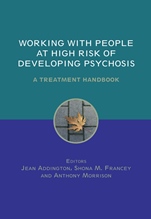
Working with People at High Risk of Developing Psychosis: A Treatment Handbook
ISBN 9780470011621
Autor: Jean Addington, Shona Francey, Anthony P. Morrison
Wydawca: Wiley
Dostępność: 3-6 tygodni
Cena: 730,80 zł
Przed złożeniem zamówienia prosimy o kontakt mailowy celem potwierdzenia ceny.
ISBN13: |
9780470011621 |
ISBN10: |
0470011629 |
Autor: |
Jean Addington, Shona Francey, Anthony P. Morrison |
Oprawa: |
Hardback |
Rok Wydania: |
2005-12-16 |
Ilość stron: |
206 |
Wymiary: |
250x180 |
Tematy: |
JC |
Today the importance of early detection and intervention for psychosis is clearly recognized by researchers, clinicians and policy makers alike. Ethical dilemmas associated with preventative approaches have led to the development of a range of psychological interventions that are likely to be more acceptable to service users and their families.
Working with People at High Risk of Developing Psychosis is unique in that it focuses on the needs of those in the pre–psychotic phase of the illness and the specific challenges that working with this ‘at risk’ group poses for the clinician. An international team of expert editors and contributors explore the identification of individuals at high risk of developing psychosis and provide an overview of many of the psychological treatment approaches. Key issues addressed include:detection strategies for finding cases at high–riskassessment and formulationselection of appropriate treatment targetsintervention with attenuated symptoms and brief psychotic episodesstress managementsubstance useworking with familiesgroup therapy
This practical treatment handbook will be an invaluable resource for all qualified and trainee clinicians working with ‘at risk’ clients. It will also be of interest to academic psychologists and students of clinical psychology.
Spis treści:
About the Editors.
List of Contributors.
Foreword.
Acknowledgements.
Chapter 1: Introduction (Shôn Lewis).
Chapter 2: Identification of the Population (Alison R. Yung).
Chapter 3: Assessment and Developing a Formulation (Shona M. Francey and Henry J. Jackson).
Chapter 4: Engagement and the Therapeutic Alliance (Jean Addington and David Penn).
Chapter 5: Assessing and Managing Stress (Lisa Phillips).
Chapter 6: Treatment Targets in the Pre–psychotic Phase (Paul Patterson, Amanda Skeate and Max Birchwood
).
Chapter 7: Substance Use and the ‘At Risk’ Period (Steven Leicester).
Chapter 8: Addressing Attenuated Symptoms in ‘At Risk’ Clients (Samantha E. Bowe, Paul French and Anthony P. Morrison).
Chapter 9: Brief Limited Intermittent Psychotic Symptoms (BLIPS): A Cognitive Behavioural Approach to Formulation and Intervention (Andrew I. Gumley).
Chapter 10: Working with Families Following the Diagnosis of an At Risk Mental State (April A. Collins and Jean Addington).
Chapter 11: Group Therapy for People at High Risk of Developing Psychosis (Andreas Bechdolf, Verena Veith and Joachim Klosterkötter).
Chapter 12: Future Challenges (Anthony P. Morrison, Shona M. Francey and Jean Addington).
Index.
Nota biograficzna:
Jean Addington completed her PhD at the University of Calgary, Alberta. She is currently Director of the PRIME Clinic and Director of Psychosocial Treatments in the First Episode Psychosis Program at the Centre for Addiction and Mental Health in Toronto, Canada. She is also an Associate Professor in the Department of Psychiatry, University of Toronto. The Toronto PRIME Clinic is a research–based clinic for individuals who have an ‘at risk mental state’. Her clinical and research interests lie in the understanding and management of this ‘at risk mental state’ and of early psychosis. She has published widely in this area: including psychosocial interventions, cognition, social functioning and substance use in early psychosis and the development of early intervention services. Her current work includes the development of risk assessment models for the conversion to psychosis and cognitive behaviour therapy in the ultra high risk period.
Shona M. Francey is a clinical psychologist with 20 years’ experience in public mental health. She began working in the field of early intervention for psychosis when the Early Psychosis Prevention and Int
ervention Centre (EPPIC) was first established in 1992 in Melbourne, Australia.Within the EPPIC programme she worked as a case manager, COPE therapist and Group Programme leader. COPE is a cognitively oriented psychotherapy that was developed at EPPIC to promote recovery from first episode psychosis. Shona has also been involved in education and training about early psychosis, and the establishment of the PACE Clinic for young people thought to be at risk of developing psychosis. At PACE she has contributed to the development and evaluation of psychological therapy for this at risk group. She completed her PhD examining neurocognitive indicators of risk for psychosis in the PACE population and is currently the Clinical Coordinator of the PACE Clinic.
Anthony P. Morrison is a Reader in Clinical Psychology at the University of Manchester and is also a Consultant Clinical Psychologist in a specialist programme of care for people with early psychosis in Salford and Trafford. He has published a number of articles on trauma and psychosis, cognitive therapy for psychosis and experimental studies of cognitive processes in psychosis, and has been involved in a number of treatment trials for cognitive therapy for early psychosis and the prevention of psychosis. He has also published several books on the topic of psychological approaches to the understanding and treatment of psychosis. Unkind observers have suggested his interest in both trauma and losing touch with reality stem from his support of Manchester City Football Club.
Okładka tylna:
Today the importance of early detection and intervention for psychosis is clearly recognized by researchers, clinicians and policy makers alike. Ethical dilemmas associated with preventative approaches have led to the development of a range of psychological interventions that are likely to be more acceptable to service users and their families.
Working with People at High Risk of Developing Psychosi
s is unique in that it focuses on the needs of those in the pre–psychotic phase of the illness and the specific challenges that working with this ‘at risk’ group poses for the clinician. An international team of expert editors and contributors explore the identification of individuals at high risk of developing psychosis and provide an overview of many of the psychological treatment approaches. Key issues addressed include:detection strategies for finding cases at high–riskassessment and formulationselection of appropriate treatment targetsintervention with attenuated symptoms and brief psychotic episodesstress managementsubstance useworking with familiesgroup therapy
This practical treatment handbook will be an invaluable resource for all qualified and trainee clinicians working with ‘at risk’ clients. It will also be of interest to academic psychologists and students of clinical psychology.
Koszyk
Książek w koszyku: 0 szt.
Wartość zakupów: 0,00 zł
Informacje


Kontakt
Gambit
Centrum Oprogramowania
i Szkoleń Sp. z o.o.
Al. Pokoju 29b/22-24
31-564 Kraków
Siedziba Księgarni
ul. Kordylewskiego 1
31-542 Kraków
+48 12 410 5991
+48 12 410 5987
+48 12 410 5989
Subskrypcje
Administratorem danych osobowych jest firma Gambit COiS Sp. z o.o. Na podany adres będzie wysyłany wyłącznie biuletyn informacyjny.
Autoryzacja płatności

Informacje na temat autoryzacji płatności poprzez PayU.

© Copyright 2012: GAMBIT COiS Sp. z o.o. Wszelkie prawa zastrzeżone.
Projekt i wykonanie: Alchemia Studio Reklamy