


Wydawcy
Katalog tematyczny
- Archeologia (109)
- Ekonomia, finanse, business (13704)
- Filozofia (1445)
- Historia (3040)
- Języki i językoznawstwo (2356)
- Lifestyle, hobby i rozrywka (475)
- Medycyna (9704)
- Nauki humanistyczne (4)
- Nauki o Ziemi i środowisku (2638)
- Geografia (299)
- Nauki o Ziemi (1661)
- Geologia (414)
- Hydrologia (237)
- Meteorologia i klimatologia (114)
- Paleontologia (33)
- Wulkanologia i sejsmologia (44)
- Planowanie przestrzenne (53)
- Środowisko (607)
- Nauki ścisłe (20412)
- Nauki społeczne (8486)
- Nauki techniczne (13450)
- Prawo (1696)
- Publikacje informacyjne i interdyscyplinarne (1288)
- Religia i wierzenia (917)
- Technika komputerowa (4067)
- Zdrowie, relacje międzyludzkie i rozwój osobisty (657)





Informacje szczegółowe o książce
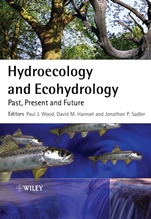
Hydroecology and Ecohydrology: Past, Present and Future
ISBN 9780470010174
Autor: Paul J. Wood, David M. Hannah, Jon P. Sadler
Wydawca: Wiley
Dostępność: 3-6 tygodni
Cena: 791,70 zł
Przed złożeniem zamówienia prosimy o kontakt mailowy celem potwierdzenia ceny.
ISBN13: |
9780470010174 |
ISBN10: |
0470010177 |
Autor: |
Paul J. Wood, David M. Hannah, Jon P. Sadler |
Oprawa: |
Hardback |
Rok Wydania: |
2007-12-21 |
Ilość stron: |
460 |
Wymiary: |
244x168 |
Tematy: |
RB |
This state–of–the–art, research level text captures the growing volume of research at the interface of hydrology and ecology and explores the:
evolution of hydroecology / ecohydrology
hydroecology process interactions and dynamics
methodological approaches
detailed case studies
future research needs
The editors and contributors are internationally recognised experts in hydrology and ecology from institutions across North America, South America, Australia, and Europe. Chapters provide a broad geographical coverage and bridge the traditional subject divide between hydrology and ecology.
The book considers a range of organisms (plants, invertebrates and fish), provides a long–term perspective on contemporary and palaeo–systems, and emphasises wider research implications with respect to environmental and water resource management.
This text will be of interest to academics and postgraduate researchers in departments of geography, environmental science, earth science, environmental management, civil engineering, water resource management, biology, zoology, botany and ecology, as well as professionals working within environmental consultancies, organizations and national agencies.
Spis treści:
List of Contributors.
Preface.
1. Ecohydrology and Hydroecology: An Introduction (Paul J. Wood, David M. Hannah and Jonathan P. Sadler).
1.1 Wider Context.
1.2 Hydroecology and Ecohydrology: A Brief Retrospective.
1.3 A Focus.
1.4 This Book.
1.5 Final Opening Remarks.
PART I. PROCESSES AND RESPONSES.
2. How Trees Influence the Hydrological Cycle in Forest Ecosystems (B.J. Bond, F.C. Meinzer and J.R. Brooks).
2.1 Introduction.
2.2 Key Processes and Concepts in Evapotranspiration – Their Historical Development and Current Status.
2.3 Evapotranspiration in Forest Ecosystems.
2.4 Applying Concepts: Changes in Hydrologic Proce
sses through the Life Cycle of Forests.
3. The Ecohydrology of Invertebrates Associated with Exposed Riverine Sediments (Jon P. Sadler and Adam J. Bates).
3.1 Introduction.
3.2 ERS Habitats.
3.3 Invertebrate Conservation and ERS Habitats.
3.4 Flow Disturbance in ERS Habitats.
3.5 The Importance of Flow Disturbance for ERS Invertebrate Ecology.
3.6 How Much Disturbance is Needed to Sustain ERS Diversity?
3.7 Threats to ERS Invertebrate Biodiversity.
4. Aquatic–Terrestrial Subsidies Along River Corridors (Achim Paetzold, John L. Sabo, Jon P. Sadler, Stuart E.G. Findlay and Klement Tockner).
4.1 Introduction.
4.2 What Controls Aquatic–Terrestrial Flows?
4.3 Aquatic–Terrestrial Flows Along River Corridors.
4.4 Infl uence of Human Impacts on Aquatic–Terrestrial Subsidies.
4.5 Conclusions.
4.6 Future Research.
5. Flow–generated Disturbances and Ecological Responses; Floods and Droughts (P.S. Lake).
5.1 Introduction.
5.2 Defi nition of Disturbance.
5.3 Disturbances and Responses.
5.4 Disturbance and Refugia.
5.5 Floods.
5.6 Droughts.
5.7 The Responses to Floods.
5.8 Responses to Drought.
5.9 Summary.
5.10 Hydrological Disturbances and Future Challenges.
6. Surface Water–Groundwater Exchange Processes and Fluvial Ecosystem Function: An Analysis of Temporal and Spatial Scale Dependency (Pascal Breil, Nancy B. Grimm and Philippe Vervier).
6.1 Introduction.
6.2 Fluvial Ecosystems: The Hydrogeomorphic Template and Ecosystem Function.
6.3 Flow Variability and SGW Water Movements.
6.4 Implications of Flow Variability for SGW Exchange and Fluvial Ecosystem Structure and Function.
6.5 Conclusion.
7. Ecohydrology and Climate Change (Wendy Gordon and Travis Huxman).
7.1 Introduction.
7.2 Ecohydrological Controls on Streamflow.
7.3 Simulation Studies of Ecohydrological Effects of Climate Change.
7.4 Experimental Studies of Ecoh
ydrological Effects of Climate Change.
7.5 Differing Perspectives of Hydrologists and Ecologists.
7.6 Future Research Needs.
7.7 Postscript.
8. The Value of Long–term (Palaeo) Records in Hydroecology and Ecohydrology (Tony Brown).
8.1 River–Floodplain–Lake Systems and the Limits of Monitoring.
8.2 Key Concepts.
8.3 Palaeoecology and Palaeohydrology: Proxies and Transfer Functions.
8.4 Palaeoecology, Restoration and Enhancement.
8.5 Case Study I. The River Culm in South–west England.
8.6 Case Study II. The Changing Status of Danish Lakes.
9. Field Methods for Monitoring Surface/Groundwater Hydrological Interactions in Aquatic Ecosystems (Andrew J. Boulton).
9.1 Introduction.
9.2 Research Contexts: Questions, Scales, Accuracy and Precision.
9.3 Direct Hydrological Methods for Assessing SGW Interactions.
9.4 Indirect Hydrological Methods for Assessing SGW Interactions.
9.5 Future Technical Challenges and Opportunities.
10. Examining the Influence of Flow Regime Variability and Instream Ecology (Wendy A. Monk, Paul J. Wood and David. M. Hannah).
10.1 Introduction.
10.2 The Requirement for Hydroecological Data.
10.3 Bibliographic Analysis.
10.4 Importance of Scale.
10.5 River Flow Data: Collection and Analysis.
10.6 Ecological Data: Collection and Analysis.
10.7 Integration of Hydrological and Ecological Data for Hydroecolical Analysis.
10.8 River Flow Variability and Ecological Response: Future.
11. High Resolution Remote Sensing for Understanding Instream Habitat (Stuart N. Lane and Patrice E. Carbonneau).
11.1 Introduction.
11.2 Scale, the Grain of Instream Habitat and the Need for Remotely Sensed Data.
11.3 Depth and Morphology.
11.4 Substrate.
11.5 Discrete Grain Identification.
11.6 Ensemble Grain Size Parameter Determination.
11.7 Example Application: Substrate Mapping in a Salmon River.
11.8 Future Developments.
12. A Mathe
matical and Conceptual Framework for Ecohydraulics (John M. Nestler, R. Andrew Goodwin, David L. Smith and James J. Anderson).
12.1 Introduction.
12.2 Ecohydraulics: Where Do the Ideas Come From?
12.3 Reference Frameworks of Engineering and Ecology.
12.4 Concepts for Ecohydraulics.
12.5 Two Examples of Ecohydraulics.
12.6 Discussion.
12.7 Conclusions.
13. Hydroecology: The Scientific Basis for Water Resources.Management and River Regulation (Geoffrey Petts).
13.1 Introduction.
13.2 A Scientifi c Basis for Water Resources Management.
13.3 Hydroecology in Water Management.
13.4 Applications to Water Resource Problems.
13.5 Conclusions.
PART III. CASE STUDIES.
14. The Role of Floodplains in Mitigating Diffuse Nitrate Pollution (T.P. Burt, M.M. Hefting, G. Pinay and S. Sabater).
14.1 Context.
14.2 Nitrogen Removal by Riparian Buffers: Results of a Pan–European Experiment.
14.3 Landscape Perspectives.
14.4 Future Perspectives.
15. Flow–Vegetation Interactions in Restored Floodplain Environments (Rachel Horn and Keith Richards).
15.1 The Need for Ecohydraulics.
15.2 The Basic Hydraulics of Flow–Vegetation Interaction.
15.3 Drag Coeffi cients and Vegetation.
15.4 Velocity, Velocity Profi les and Vegetation Character.
15.5 Dimensionality: Flow Velocity in Compound Channels with Vegetation.
15.6 Some Empirical Illustrations of Flow–Vegetation Interactions.
15.7 Conclusions.
16. Hydrogeomorphological and Ecological Interactions in Tropical Floodplains: The Signifi cance of Confl uence Zones in the Orinoco Basin, Venezuela (J. Rosales, L. Blanco–Belmonte and C. Bradley).
16.1 Introduction.
16.2 Hydrogeomorphological Dynamics.
16.3 The Riparian Ecosystem.
16.4 Longitudinal Gradients at Confl uence Zones.
16.5 Synthesis and Conclusions.
17. Hydroecological Patterns of Change in Riverine Plant Communities (Birgitta M. Renöfält and C
Koszyk
Książek w koszyku: 0 szt.
Wartość zakupów: 0,00 zł
Informacje


Kontakt
Gambit
Centrum Oprogramowania
i Szkoleń Sp. z o.o.
Al. Pokoju 29b/22-24
31-564 Kraków
Siedziba Księgarni
ul. Kordylewskiego 1
31-542 Kraków
+48 12 410 5991
+48 12 410 5987
+48 12 410 5989
Subskrypcje
Administratorem danych osobowych jest firma Gambit COiS Sp. z o.o. Na podany adres będzie wysyłany wyłącznie biuletyn informacyjny.
Autoryzacja płatności

Informacje na temat autoryzacji płatności poprzez PayU.

© Copyright 2012: GAMBIT COiS Sp. z o.o. Wszelkie prawa zastrzeżone.
Projekt i wykonanie: Alchemia Studio Reklamy