


Wydawcy
Katalog tematyczny
- Archeologia (109)
- Ekonomia, finanse, business (13704)
- Filozofia (1445)
- Historia (3040)
- Języki i językoznawstwo (2356)
- Lifestyle, hobby i rozrywka (475)
- Medycyna (9704)
- Nauki humanistyczne (4)
- Nauki o Ziemi i środowisku (2638)
- Nauki ścisłe (20412)
- Nauki społeczne (8486)
- Nauki techniczne (13450)
- Budownictwo lądowe (1045)
- Chemia przemysłowa (2258)
- Elektronika i telekomunikacja (3287)
- Energetyka (1122)
- Inne nauki stosowane (363)
- Inżynieria biochemiczna (507)
- Inżynieria transportu (232)
- Mechanika i materiały (3316)
- Nauka o środowisku (321)
- Rolnictwo (507)
- Technika, ogólnie (475)
- Prawo (1696)
- Publikacje informacyjne i interdyscyplinarne (1288)
- Religia i wierzenia (917)
- Technika komputerowa (4067)
- Zdrowie, relacje międzyludzkie i rozwój osobisty (657)





Informacje szczegółowe o książce
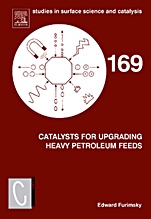
Catalysts for Upgrading Heavy Petroleum Feeds
ISBN 9780444530844
Autor: Furimsky, Edward
Wydawca: Elsevier
Dostępność: 3-6 tygodni
Cena: 990,15 zł
Przed złożeniem zamówienia prosimy o kontakt mailowy celem potwierdzenia ceny.
ISBN13: |
9780444530844 |
ISBN10: |
0444530843 |
Autor: |
Furimsky, Edward |
Oprawa: |
Hardback |
Rok Wydania: |
2007-08-01 |
Tematy: |
TC |
The book provides the most up-to-date information on testing and development of hydroprocessing catalysts with the aim to improve performance of the conventional and modified catalysts as well as to develop novel catalytic formulations. Besides diverse chemical composition, special attention is devoted to pore size and pore volume distribution of the catalysts. Properties of the catalysts are discussed in terms of their suitability for upgrading heavy feeds. For this purpose atmospheric residue was chosen as the base for defining other heavy feeds which comprise vacuum gas oil, deasphalted oil and vacuum residues in addition to topped heavy crude and bitumen. Attention is paid to deactivation with the aim to extent catalyst life during the operation. Into consideration is taken the loss of activity due to fouling, metal deposition, coke formed as the result of chemical reaction and poisoning by nitrogen bases. Mathematical models were reviewed focussing on those which can simulate performance of the commercial operations. Configurations of hydroprocessing reactors were compared in terms of their capability to upgrade various heavy feeds providing that a suitable catalyst was selected. Strategies for regeneration, utilization and disposal of spent hydroprocesing catalysts were evaluated. Potential of the non-conventional hydroprocessing involving soluble/dispersed catalysts and biocatalysts in comparison with conventional methods were assessed to identify issues which prevent commercial utilization of the former. A separate chapter is devoted to catalytic dewaxing because the structure of dewaxing catalysts is rather different than that of hydroprocessing catalysts, i.e., the objective of catalytic dewaxing is different than that of the conventional hydroprocessing, The relevant information in the scientific literature is complemented with the Patent literature covering the development of catalysts and novel reactor configurations.
Separate chapter was added to distinguish upgrading capabilities of the residues catalytic cracking processes from those employing hydroprocessing. Upper limits on the content of carbon residue and metals in the feeds which can still be upgraded by the former processes differ markedly from those in the feeds which can be upgraded by hydroprocessing. It is necessary that the costs of modifications of catalytic cracking processes to accommodate heavier feeds are compared with that of hydroprocessing methods.
Objective of the short chapter on upgrading by carbon rejecting processes was to identify limits of contaminants in heavy feeds beyond which catalytic upgrading via hydroprocessing becomes uneconomical because of the costs of catalyst inventory and that of reactors and equipment.
- Comprehensive and most recent information on hydroprocessing catalysts for upgrading heavy petroleum feeds.
- Compares conventional, modified and novel catalysts for upgrading a wide range of heavy petroleum feeds.
- Comparison of conventional with non-conventional hydroprocessing, the latter involving soluble/dispersed catalysts and biocatalysts.
- Development and comparison of mathematical models
to simulate performance of catalytic reactors including most problematic feeds.
- Residues upgrading by catalytic cracking in comparison to hydroprocessing.
I. Introduction
II. Properties of Heavy Feeds
III. Properties of Catalysts for Hydroprocessing Heavy Feeds
IV. Selection of Reactors for Hydroprocessing Research
V. Development and Testing of Catalysts
VI. Hydroprocessing Reactions
VII. Deactivation of Catalysts
VIII. Selection of Catalysts for Commercial Hydroprocessing Reactors
IX. Patent Literature on Hydroprocessing Catalysts and Reactors
X. Spent Hydroprocessing Catalysts
XI. Hydroprocessing of Vgo and Dao for Production of Lubricants
XII. Non-Conventional Catalytic Upgrading of Heavy Feeds
XIII. Residues Upgrading by Catalytic Cracking
XIV. Carbon Rejecting Processes
XV. Uncommon Processes
XVI. Conclusions
XVII. References
Koszyk
Książek w koszyku: 0 szt.
Wartość zakupów: 0,00 zł
Informacje


Kontakt
Gambit
Centrum Oprogramowania
i Szkoleń Sp. z o.o.
Al. Pokoju 29b/22-24
31-564 Kraków
Siedziba Księgarni
ul. Kordylewskiego 1
31-542 Kraków
+48 12 410 5991
+48 12 410 5987
+48 12 410 5989
Subskrypcje
Administratorem danych osobowych jest firma Gambit COiS Sp. z o.o. Na podany adres będzie wysyłany wyłącznie biuletyn informacyjny.
Autoryzacja płatności

Informacje na temat autoryzacji płatności poprzez PayU.

© Copyright 2012: GAMBIT COiS Sp. z o.o. Wszelkie prawa zastrzeżone.
Projekt i wykonanie: Alchemia Studio Reklamy