


Wydawcy
Katalog tematyczny
- Archeologia (109)
- Ekonomia, finanse, business (13704)
- Filozofia (1445)
- Historia (3040)
- Języki i językoznawstwo (2356)
- Lifestyle, hobby i rozrywka (475)
- Medycyna (9704)
- Nauki humanistyczne (4)
- Nauki o Ziemi i środowisku (2638)
- Nauki ścisłe (20412)
- Astronomia (294)
- Biologia (5119)
- Chemia (6540)
- Chemia analityczna (361)
- Chemia fizyczna (346)
- Chemia nieorganiczna (137)
- Chemia organiczna (535)
- Krystalografia (27)
- Minerologia (46)
- Fizyka (3309)
- Matematyka (4574)
- Nauki ścisłe, ogólnie (503)
- Nauki społeczne (8486)
- Nauki techniczne (13450)
- Prawo (1696)
- Publikacje informacyjne i interdyscyplinarne (1288)
- Religia i wierzenia (917)
- Technika komputerowa (4067)
- Zdrowie, relacje międzyludzkie i rozwój osobisty (657)





Informacje szczegółowe o książce
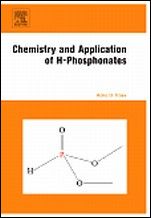
Chemistry and Application of H-Phosphonates
ISBN 9780444527370
Autor: Troev, Kolio D.
Wydawca: Elsevier
Dostępność: 3-6 tygodni
Cena: 1 509,90 zł
Przed złożeniem zamówienia prosimy o kontakt mailowy celem potwierdzenia ceny.
ISBN13: |
9780444527370 |
ISBN10: |
0444527370 |
Autor: |
Troev, Kolio D. |
Oprawa: |
Hardback |
Rok Wydania: |
2006-07-19 |
Tematy: |
PN |
Chemistry and Application of H-Phosphonates is an excellent source for those planning the synthesis of new phosphorus-containing compounds and in particular derivatives containing a phosphonate, phosphoramide or phosphonic acid diester group. The rich chemistry, low cost and easy availability of diesters of H-phosphonic acid makes them an excellent choice as synthone in a number of practically important reactions.
Phosphonic acid esters are intermediates in the synthesis of important classes of compounds such as alpha-aminophosphonic acids, bisphosphonates, epoxyalkylphosphonates, alpha-hydroxyalkylphosphonates, phosphoramides, poly(alkylene H-phosphonate)s, poly(alkylene phosphate)s, nucleoside H-phosphonates. The synthesis of each of these compound classes is reviewed in detail.
Alpha-Aminophosphonic acids are an important class of biologically active compounds, which have received an increasing amount of attention because they are considered to be structural analogues of the corresponding Alpha-amino acids. The utilities of alpha-aminophosphonates as peptide mimics, haptens of catalytic antibodies, enzyme inhibitors, inhibitors of cancers, tumours, viruses, antibiotics and pharmacologic agents are well documented. Alpha-Hydroxyalkanephosphonates are compounds of significant biological and medicinal applications. Dialkyl epoxyalkylphosphonates are of interest because of their use as intermediates in the synthesis of bioactive substances, and as modifiers of natural and synthetic polymers. Bisphosphonates are drugs that have been widely used in different bone diseases, and have recently been used successfully against many parasites. Poly(alkylene H-phosphonate)s and poly(alkylene phosphate)s are promising, biodegradable, water soluble, new polymer-carriers of drugs. Nucleoside H-phosphonates seem to be the most attractive candidates as starting materials in the chemical synthesis of DNA and RNA fragments. The 5’-hydrogen phosphonate-3’-azido-2’,3’-dideoxythimidine is one of the most significant anti-HIV prodrug, which is currently in clinical trials.
Chapters review the synthesis; physical and spectral properties (1H, 13C, 31P and 17O NMR data); characteristic reactions; important classes of compounds based on these esters of H-phosphonic acid; their application as physiologically active substances, flame retardants, catalysts, heat and light stabilizers, lubricants, scale inhibitors, polymer-carriers of drugs; preparation of H-phosphonate diesters and general procedures for conducting the most important reactions.
* provides ideas for the synthesis of phosphonates, phosphoramides and diesters of phosphonic acid (new phosphorus-containing compounds)
* reviews structure, spectra and biological activity of H-phosphonates and their derivatives
* examines new areas of application of phosphorus-containing compounds
Chapter 1. Methods for preparation and physical properties of H-phosphonates
1.1. From phosphorus trichloride and alcohols
1.2. From H-phosphonic acid
1.3. From white phosphorus and alcohols
1.4. Others
1.5. Physical properties
1.6. Thermal stability
Chapter 2. Structure and spectral characteristics of H-phosphonates
2.1. Electronic structure of phosphorus atom
2.2. Nature of the chemical bonds in phosphoryl group
2.3. Molecular structure of dimethyl H-phosphonate
2.4. Tautomerization of dialkyl H-phosphonates
2.5. Spectral characteristics
Chapter 3. Reactivity of H-phosphonates
3.1. Acidity of H-phosphonate diesters
3.2. Disproportionation
3.3. Reduction
3.4. Hydrolysis
3.5. Acidolysis
3.6. Substitution reactions at the phosphorus atom
Chapter 4. Important classes of compounds
4.1. Aminophosphonic acids
4.2. Bisphosphonates
4.3. Nucleoside H-phosphonates
4.4. Epoxyalkylphosphonates
4.5. Poly(alkylene H-phosphonate)s
4.6. Metal salts of dialkyl H-phosphonates
4.7. Complexes of dialkyl H-phosphonates
Chapter 5. Application of H–phosphonates and their derivatives
5.1. Physiologically-active substances
5.2. Polymer additives
5.3. Degrading and alkylating agents of polymers
5.4. Heat, light and UV stabilizers
5.5. Catalysts
5.6. Corrosion inhibitors
5.7. Scale inhibitors
5.8. Lubricants
Koszyk
Książek w koszyku: 0 szt.
Wartość zakupów: 0,00 zł
Informacje


Kontakt
Gambit
Centrum Oprogramowania
i Szkoleń Sp. z o.o.
Al. Pokoju 29b/22-24
31-564 Kraków
Siedziba Księgarni
ul. Kordylewskiego 1
31-542 Kraków
+48 12 410 5991
+48 12 410 5987
+48 12 410 5989
Subskrypcje
Administratorem danych osobowych jest firma Gambit COiS Sp. z o.o. Na podany adres będzie wysyłany wyłącznie biuletyn informacyjny.
Autoryzacja płatności

Informacje na temat autoryzacji płatności poprzez PayU.

© Copyright 2012: GAMBIT COiS Sp. z o.o. Wszelkie prawa zastrzeżone.
Projekt i wykonanie: Alchemia Studio Reklamy