


Wydawcy
Katalog tematyczny
- Archeologia (109)
- Ekonomia, finanse, business (13704)
- Filozofia (1445)
- Historia (3040)
- Języki i językoznawstwo (2356)
- Lifestyle, hobby i rozrywka (475)
- Medycyna (9704)
- Nauki humanistyczne (4)
- Nauki o Ziemi i środowisku (2638)
- Nauki ścisłe (20412)
- Nauki społeczne (8486)
- Edukacja (229)
- Kryminologia, opieka spełeczna (284)
- Obronność (10)
- Polityka (1389)
- Psychologia (777)
- Socjologia (410)
- Społeczeństwo i kultura (187)
- Nauki techniczne (13450)
- Prawo (1696)
- Publikacje informacyjne i interdyscyplinarne (1288)
- Religia i wierzenia (917)
- Technika komputerowa (4067)
- Zdrowie, relacje międzyludzkie i rozwój osobisty (657)





Informacje szczegółowe o książce
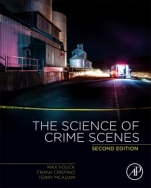
The Science of Crime Scenes
ISBN 9780128498781
Autor: Houck, Max M.Crispino, FrankMcAdam, Terry
Wydawca: Elsevier
Dostępność: 3-6 tygodni
Cena: 404,25 zł
Przed złożeniem zamówienia prosimy o kontakt mailowy celem potwierdzenia ceny.
ISBN13: |
9780128498781 |
Autor: |
Houck, Max M.Crispino, FrankMcAdam, Terry |
Oprawa: |
Hardback |
Rok Wydania: |
2017-07-12 |
Tematy: |
JKVF1 |
The Science of Crime Scenes, Second Edition offers a science-based approach to crime scenes, emphasizing that understanding is more important than simply knowing. Without sacrificing technical details, the book adds significantly to the philosophy and theory of crime scene science. This new edition addresses the science behind the scenes and demonstrates the latest methods and technologies with updated figures and images. It covers the philosophy of the crime scene, the personnel involved at a scene (including the media), the detection of criminal traces and their reconstruction, and special crime scenes, such as mass disasters and terroristic events. Written by an international trio of authors with decades of crime scene experience, this book is the next generation of crime scene textbooks. This volume will serve both as a textbook for forensic programs, and as an excellent reference for forensic practitioners and crime scene technicians with science backgrounds.
Review: "...crime scene investigators will learn that returning to this book after each crime scene will lead to steady improvement of their skills from initial contact with a crime through testimony in court. The Science of Crime Scene is the first successful crime scene investigation manual for the information age." --Karl Williams, Chief Medical Examiners, Office of the Allegheny County Medical Examiner, Pittsburgh, Pennsylvania, USA "The second edition of The Science of Crime Scenes is not only excellent text for forensic scientists and crime scene investigators, but also a great reference book for the detective, prosecutor, and defense attorney. As the end user of the forensic sciences, I must understand what is possible (and not) as well as the mindset that is behind the work. This book provides that and more, and will be a well highlighted occupant of my bookshelf." - James Trainum (Criminal Case Consultant, Homicide Detective (Retired)
Author Biography: Dr. Max M. Houck is an international forensic expert with over 25 years of experience. Houck has experience in the private sector, academia, local government, and worked at the Federal Bureau of Investigation Laboratory Division. He has worked as a forensic anthropologist, a trace evidence analyst, a researcher, and has managed millions of dollars in grants and awards. Most recently, he was the inaugural Director of the Department of Forensic Sciences in Washington, D.C., overseeing 150 employees and managing the forensic science laboratory, the public health laboratory, and crime scene sciences for the nation's capital. Houck has worked on a number of mass casualty scenes, including the Branch Davidian Investigation and the September 11, 2001 attack on the Pentagon. Widely published, Houck has dozens of peer-reviewed journal articles and is the author and editor of numerous books. He is co-author of the best-selling Fundamentals of Forensic Science, Science of Crime Scenes, and Success with Expert Testimony, among others. He is the editor of the Advanced Forensic Science series of books. Houck is also founding co-editor of Forensic Science Policy and Management (the official journal of ASCLD), the only journal that addresses the management, policy, and administration of forensic science. Houck has served on numerous committees, including for the National Academies of Science, NIST, Interpol, The Royal Society, the Director of the FBI, and the White House. He is a popular public speaker and has given presentations at NASA, the Max Planck Institute, an Oxford Roundtable, as well as keynote talks at numerous international conferences. Houck has taught at several universities, including West Virginia University and University of Tampa. His research topics include management, leadership, and policy implications for forensic organizations. Houck has a Bachelors and Masters degree in anthropology from Michigan State University. He received his Ph.D. in Applied Chemistry Summa Cum Laude from Curtin University in Perth, Australia. He is a Fellow of the Royal Society of Chemistry. Dr Frank Crispino served for 25 years in the French Gendarmerie, one of the two State Police forces of France under military status. He retired with the rank of Colonel in 2012. A graduate from the French Air Force and Gendarmerie Academies, he joined l'Institut de recherche criminelle de la gendarmerie nationale (IRCGN), the Gendarmerie Forensic Institute, in 1993 to create the forensic anthropology department, as the core of the French Disaster Victim Identification Unit. Dr. Crispino is a graduate from the French War College (2003-2004), has a Ph.D. in forensic science from Lausanne University, School of Criminal Sciences (2006). He commanded two Criminal Investigation Departments at regional levels (serious/organized crimes and terrorism) in central and southwestern France (Bourges from 2002 to 2003 and Bordeaux from 2007 to 2011) and served as Deputy Head of the Antiterrorist Bureau at the General Headquarters of the French Gendarmerie in Paris (2003-2007), where he joined the G8 counter-terrorist group and other relevant EU bodies. He concluded his military career as representative of the Division General in charge of the Forensic and Intelligence Hub of the French Gendarmerie (2011-2012) to launch a new forensic academic curriculum in the Bachelor in Chemistry at l'Universite du Quebec a Trois-Rivieres (UQTR). Professor Crispino is author or co-author of two books, 8 book chapters, more than 40 peer-reviewed articles. He is the director of the Laboratoire de recherche en criminalistique (www.uqtr.ca/LRC) - Forensic Research Group - at the UQTR, regular researcher at the International Centre for Comparative Criminology (http://www.cicc.umontreal.ca/en). Terry McAdam is the Director of the Washington State Patrol Seattle Crime Laboratory. He has been a practicing forensic scientist for 39 years. He began his career with the State Crime Laboratory in Northern Ireland where he worked for 10 years in the testing of blood alcohols, breath alcohol, toxicology, fire debris, explosives, and trace evidence,. In the United States he has worked in many other disciplines in forensic science including, drug analysis, bloodstain pattern interpretation, and crime scene reconstruction. He has attended over 300 crimes scenes, and was a major participant in the crime scenes and the trace evidence analysis associated with the Green River homicides. He has assessed many crime laboratories throughout the world and in 2014 he was the recipient from the American Society of Crime Lab Directors, of the inaugural Longhetti/Keaton Assessor Excellence Award.
SECTION 1: THE SCIENCE OF CRIME SCENE INVESTIGATIONChapter 1.0: The "Forensic MindsetÂChapter 1.1: From Scene to Laboratory to CourtChapter 2.0: What Is a Crime Scene?Chapter 2.1: Crime Scene Intelligence: Connecting People, Places, and ThingsSECTION 2: PERSONNEL AND PROCEDURESChapter 3.0: PersonnelChapter 3.1: First Responder on the SceneChapter 3.2: The Investigator in ChargeChapter 3.3: The Forensic Team: Officers, Scientists, and SpecialistsChapter 3.4: Nonforensic Personnel: Superiors, Officials, and the MediaChapter 4.0: General Crime Scene ProcedureChapter 4.1: "Freezing the Scene and the Three R's (Recognize, Recover, and Record)Chapter 4.2: The Chain of CustodyChapter 4.3: Recording the Scene: Sketching, Photography, and VideoSECTION 3: DETECTION AND RECONSTRUCTIONChapter 5.0: Searching for Evidence: RecoveryChapter 5.1: DetectingChapter 5.2: CollectionChapter 5.3: Preserving Chapter 5.4: Submitting Evidence to the LaboratoryChapter 6.0: Evidence Types and EnhancementChapter 6.1: Chemical EvidenceChapter 6.2: Biological EvidenceChapter 6.3: Impression EvidenceChapter 6.4: Other Types of EvidenceChapter 7.0: Crime Scene ReconstructionChapter 7.1: An Archaeological Approach Of Artifacts and EvidenceChapter 7.2: Bloodstain Pattern AnalysisChapter 7.3: Photogrammetry and 3D ReconstructionSECTION 4: SPECIAL CRIME SCENESChapter 8.0: Special Crime ScenesChapter 8.1: Disaster and Mass FatalitiesChapter 8.2: Terrorist Crime ScenesChapter 8.3: CBRN Crime ScenesChapter 8.4: Underwater and Underground Crime Scenes
Koszyk
Książek w koszyku: 0 szt.
Wartość zakupów: 0,00 zł
Informacje


Kontakt
Gambit
Centrum Oprogramowania
i Szkoleń Sp. z o.o.
Al. Pokoju 29b/22-24
31-564 Kraków
Siedziba Księgarni
ul. Kordylewskiego 1
31-542 Kraków
+48 12 410 5991
+48 12 410 5987
+48 12 410 5989
Subskrypcje
Administratorem danych osobowych jest firma Gambit COiS Sp. z o.o. Na podany adres będzie wysyłany wyłącznie biuletyn informacyjny.
Autoryzacja płatności

Informacje na temat autoryzacji płatności poprzez PayU.

© Copyright 2012: GAMBIT COiS Sp. z o.o. Wszelkie prawa zastrzeżone.
Projekt i wykonanie: Alchemia Studio Reklamy