


Wydawcy
Katalog tematyczny
- Archeologia (109)
- Ekonomia, finanse, business (13704)
- Filozofia (1445)
- Historia (3040)
- Języki i językoznawstwo (2356)
- Lifestyle, hobby i rozrywka (475)
- Medycyna (9704)
- Chirurgia (272)
- Inne gałęzie medycyny (1871)
- Medycyna kliniczna (4187)
- Medycyna niekonwencjonalna (14)
- Medycyna przedkliniczna (269)
- Medycyna, ogólnie (1740)
- Medyczne służby pomocnicze (745)
- Inżynieria biomedyczna (396)
- Okulistyka (1)
- Pielęgniarstwo (128)
- Położnictwo (10)
- Radiografia (2)
- Rehabilitacja (11)
- Terapia zajęciowa (2)
- Terapie specjalne (10)
- Studia medyczne (16)
- Weterynaria (548)
- Nauki humanistyczne (4)
- Nauki o Ziemi i środowisku (2638)
- Nauki ścisłe (20412)
- Nauki społeczne (8486)
- Nauki techniczne (13450)
- Prawo (1696)
- Publikacje informacyjne i interdyscyplinarne (1288)
- Religia i wierzenia (917)
- Technika komputerowa (4067)
- Zdrowie, relacje międzyludzkie i rozwój osobisty (657)





Informacje szczegółowe o książce
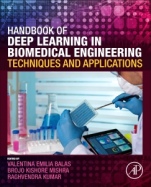
Handbook of Deep Learning in Biomedical Engineering: Techniques and Applications
ISBN 9780128230145
Autor: Balas, Valentina E.Mishra, Brojo KishoreKumar, Raghvendra
Wydawca: Elsevier
Dostępność: 3-6 tygodni
Cena: 749,70 zł
Przed złożeniem zamówienia prosimy o kontakt mailowy celem potwierdzenia ceny.
ISBN13: |
9780128230145 |
Autor: |
Balas, Valentina E.Mishra, Brojo KishoreKumar, Raghvendra |
Oprawa: |
Paperback |
Rok Wydania: |
2020-11-17 |
Tematy: |
MQW |
Deep learning (DL) is a method of machine learning, running over artificial neural networks, that uses multiple layers to extract high-level features from large amounts of raw data. DL methods apply levels of learning to transform input data into more abstract and composite information. Handbook for Deep Learning in Biomedical Engineering: Techniques and Applications gives readers a complete overview of the essential concepts of DL and its applications in the field of biomedical engineering. DL has been rapidly developed in recent years, in terms of both methodological constructs and practical applications. DL provides computational models of multiple processing layers to learn and represent data with higher levels of abstraction. It is able to implicitly capture intricate structures of large-scale data and is ideally suited to many of the hardware architectures that are currently available. The ever-expanding amount of data that can be gathered through biomedical and clinical information sensing devices necessitates the development of machine learning and artificial intelligence techniques such as DL and convolutional neural networks to process and evaluate the data. Some examples of biomedical and clinical sensing devices that use DL include computed tomography (CT), magnetic resonance imaging (MRI), ultrasound, single photon emission computed tomography (SPECT), positron emission tomography (PET), magnetic particle imaging, electroencephalography/magnetoencephalography (EE/MEG), optical microscopy and tomography, photoacoustic tomography, electron tomography, and atomic force microscopy. Handbook for Deep Learning in Biomedical Engineering: Techniques and Applications provides the most complete coverage of DL applications in biomedical engineering available, including detailed real-world applications in areas such as computational neuroscience, neuroimaging, data fusion, medical image processing, neurological disorder diagnosis for diseases such as Alzheimer’s, attention deficit hyperactivity disorder (ADHD), and autism spectrum disorder (ASD), tumor prediction, and translational multimodal imaging analysis.
Presents a comprehensive handbook of the biomedical engineering applications of DL, including computational neuroscience, neuroimaging, time series data such as MRI, functional MRI, CT, EEG, MEG, and data fusion of biomedical imaging data from disparate sources, such as X-Ray/CT. Helps readers understand key concepts in DL applications for biomedical engineering and health care, including manifold learning, classification, clustering, and regression in neuroimaging data analysis. Provides readers with key DL development techniques such as creation of algorithms and application of DL through artificial neural networks and convolutional neural networks. Includes coverage of key application areas of DL such as early diagnosis of specific diseases such as Alzheimer’s, ADHD, and ASD, and tumor prediction through MRI and translational multimodality imaging and biomedical applications such as detection, diagnostic analysis, quantitative measurements, and image guidance of ultrasonography. ~
1. Congruence of deep learning in biomedical engineering: future prospects and challenges
2. Deep convolutional neural network in medical image processing
3. Application, algorithm, and tools directly related to deep learning
4. A critical review on using blockchain technology in education domain
5. Depression discovery in cancer communities using deep learning
6. Plant leaf disease classification based on feature selection and deep neural network
7. Early detection and diagnosis using deep learning
8. A review on plant diseases recognition through deep learning
9. Applications of deep learning in biomedical engineering
10. Deep neural network in medical image processing
Koszyk
Książek w koszyku: 0 szt.
Wartość zakupów: 0,00 zł
Informacje


Kontakt
Gambit
Centrum Oprogramowania
i Szkoleń Sp. z o.o.
Al. Pokoju 29b/22-24
31-564 Kraków
Siedziba Księgarni
ul. Kordylewskiego 1
31-542 Kraków
+48 12 410 5991
+48 12 410 5987
+48 12 410 5989
Subskrypcje
Administratorem danych osobowych jest firma Gambit COiS Sp. z o.o. Na podany adres będzie wysyłany wyłącznie biuletyn informacyjny.
Autoryzacja płatności

Informacje na temat autoryzacji płatności poprzez PayU.

© Copyright 2012: GAMBIT COiS Sp. z o.o. Wszelkie prawa zastrzeżone.
Projekt i wykonanie: Alchemia Studio Reklamy