


Wydawcy
Katalog tematyczny
- Archeologia (109)
- Ekonomia, finanse, business (13704)
- Filozofia (1445)
- Historia (3040)
- Języki i językoznawstwo (2356)
- Lifestyle, hobby i rozrywka (475)
- Medycyna (9704)
- Chirurgia (272)
- Inne gałęzie medycyny (1871)
- Medycyna kliniczna (4187)
- Medycyna niekonwencjonalna (14)
- Medycyna przedkliniczna (269)
- Medycyna, ogólnie (1740)
- Medyczne służby pomocnicze (745)
- Inżynieria biomedyczna (396)
- Okulistyka (1)
- Pielęgniarstwo (128)
- Położnictwo (10)
- Radiografia (2)
- Rehabilitacja (11)
- Terapia zajęciowa (2)
- Terapie specjalne (10)
- Studia medyczne (16)
- Weterynaria (548)
- Nauki humanistyczne (4)
- Nauki o Ziemi i środowisku (2638)
- Nauki ścisłe (20412)
- Nauki społeczne (8486)
- Nauki techniczne (13450)
- Prawo (1696)
- Publikacje informacyjne i interdyscyplinarne (1288)
- Religia i wierzenia (917)
- Technika komputerowa (4067)
- Zdrowie, relacje międzyludzkie i rozwój osobisty (657)





Informacje szczegółowe o książce
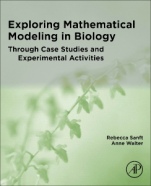
Exploring Mathematical Modeling in Biology Through Case Studies and Experimental Activities
ISBN 9780128195956
Autor: Sanft, RebeccaWalter, Anne
Wydawca: Elsevier
Dostępność: 3-6 tygodni
Cena: 541,80 zł
Przed złożeniem zamówienia prosimy o kontakt mailowy celem potwierdzenia ceny.
ISBN13: |
9780128195956 |
Autor: |
Sanft, RebeccaWalter, Anne |
Oprawa: |
Paperback |
Rok Wydania: |
2020-04-01 |
Tematy: |
MQW |
Exploring Mathematical Modeling in Biology through Case Studies and Experimental Activities provides supporting materials for courses taken by students majoring in mathematics, computer science or in the life sciences. The book's cases and lab exercises focus on hypothesis testing and model development in the context of real data. The supporting mathematical, coding and biological background permit readers to explore a problem, understand assumptions, and the meaning of their results. The experiential components provide hands-on learning both in the lab and on the computer. As a beginning text in modeling, readers will learn to value the approach and apply competencies in other settings.
Included case studies focus on building a model to solve a particular biological problem from concept and translation into a mathematical form, to validating the parameters, testing the quality of the model and finally interpreting the outcome in biological terms. The book also shows how particular mathematical approaches are adapted to a variety of problems at multiple biological scales. Finally, the labs bring the biological problems and the practical issues of collecting data to actually test the model and/or adapting the mathematics to the data that can be collected.
Presents a single volume on mathematics and biological examples, with data and wet lab experiences suitable for non-expertsContains three real-world biological case studies and one wet lab for application of the mathematical modelsIncludes R code templates throughout the text, which are also available through an online repository, along with the necessary data files to complete all projects and labs
Unit 1 Introduction to Modeling using Difference Equations 1.1 Discrete-Time Models 1.1.1 Solutions to First-Order Difference Equations 1.1.2 Using Linear Regression to Estimate Parameters 1.2 Putting it all together: The Whooping Crane 1.3 CaseStudy1: Island Biogeography 1.3.1 Background 1.3.2 Model Formulation 1.3.3 Rakata Story 1.3.4 Modern Approach: Lineage Data 1.3.5 Back to MacArthur and Wilson: Effects of Distance and Area 1.4 CaseStudy2: Pharmacokinetics Model 1.4.1 Background 1.4.2 Formulating the model 1.4.3 Understanding the Model 1.4.4 Parameter Estimation 1.4.5 Model Evaluation/Analysis 1.4.6 Further Exploration 1.5 CaseStudy3: Invasive Plant Species 1.5.1 Background 1.5.2 Model Formulation 1.5.3 Parameter Estimation 1.5.4 Model Predictions 1.5.5 Management Strategies 1.6 Wet Lab: Logistic Growth Model of Bacterial Population Dynamics 1.6.1 Introduction 1.6.2 Modeling populations 1.6.3 The Experiment 1.6.4 Model Calibration and Analysis 1.6.5 Experiment Part2: Effect of changing Media
Unit 2 Differential Equations: Model Formulation, Nonlinear Regression, and Model Selection 2.1 Biological Background 2.2 Mathematical and R Background 2.2.1 Differential Equation Based Model Formulation 2.2.2 Solutions to Ordinary Differential Equations 2.2.3 Investigating Parameter Space 2.2.4 Nonlinear Fitting 2.3 Model Selection 2.4 Case Study 1: How Leaf Decomposition Rates Vary with Anthropogenic Nitrogen Deposition 2.4.1 Background 2.4.2 The Data 2.4.3 Model Formulation 2.4.4 Parameter Estimation 2.4.5 Model Evaluation 2.5 Case Study 2: Exploring Models to Describe Tumor Growth Rates 2.5.1 Background 2.5.2 The Data 2.5.3 Model Formulation 2.5.4 Parameter Estimation 2.5.5 Model Evaluation: Descriptive Power 2.5.6 Model Evaluation: Predictive Power 2.6 Case Study 3: Predator Responses to Prey Density Vary with Temperature 2.6.1 Background 2.6.2 Analysis of functional response data: determining the parameters 2.6.3 Exploring functional responses as a function of temperature 2.7 Wet Lab: Enzyme Kinetics of Catechol Oxidase 2.7.1 Overview of Activities 2.7.2 Introduction to Enzyme Catalyzed Reaction Kinetics 2.7.3 Deriving the model 2.7.4 Estimating KM and Vmax 2.7.5 Our Enzyme: Catechol Oxidase 2.7.6 Experiment: Collecting Initial Rates for the Michaelis-Menten Model 2.7.7 Effects of Inhibitors on Enzyme Kinetics 2.7.8 Experiment: Measuring the Effects of Two Catechol Oxidase Inhibitors, Phenylthiourea and Benzoic Acid
Unit 3 Differential Equations: Numerical Solutions, Model Calibration, and Sensitivity Analysis 3.1 Biological Background 3.2 Mathematical and R Background 3.2.1 Numerical Solutions to Differential Equations 3.2.2 Calibration: Fitting Models to Data 3.2.3 Sensitivity Analysis 3.2.4 Putting it all together: The Dynamics of Ebola Virus Infecting Cells 3.3 Case Study: Influenza: Adapting the Classic SIR Model to the 2009 Influenza Pandemic 3.3.1 Background 3.3.2 The SIR Model 3.3.3 Cumulative Number of Cases 3.3.4 Epidemic Threshold 3.3.5 Public Health Interventions 3.3.6 2009 H1N1 Influenza Pandemic 3.4 Case Study 2: Prostate Cancer: optimizing immuno-therapy 3.4.1 Background 3.4.2 Model Formulation 3.4.3 Model Implementation 3.4.4 Parameter Estimation 3.4.5 Vaccination Protocols and Model Predictions 3.4.6 Sensitivity Analysis 3.4.7 Simulating Other Treatment Strategies 3.5 Case Study 3: Quorum Sensing 3.5.1 Introduction 3.5.2 Model Formulation 3.5.3 Parameter Estimation 3.5.4 Model Simulations 3.5.5 Sensitivity Analysis 3.6 Wet Lab: Hormones and Homeostasis—Keeping Blood Glucose Concentrations Stable 3.6.1 Overview of Activities 3.6.2 Introduction to blood glucose regulation and its importance 3.6.3 Developing a model 3.6.4 Experiment: Measuring Blood Glucose Concentrations Following Glucose Ingestion 3.6.5 Analysis 3.6.6 Thoughts to Consider for Potential Follow-up Experiments
Unit 4 Technical Notes for Laboratory Activities 4.1 Introduction 4.2 Population Growth 4.3 Enzyme Kinetics 4.3.1 Notes on other enzymes or similar experiments 4.4 Instructor Notes for the Blood Glucose Monitoring Lab 4.4.1 Tips for glucose monitoring 4.4.2 Other Lab Activities
Koszyk
Książek w koszyku: 0 szt.
Wartość zakupów: 0,00 zł
Informacje


Kontakt
Gambit
Centrum Oprogramowania
i Szkoleń Sp. z o.o.
Al. Pokoju 29b/22-24
31-564 Kraków
Siedziba Księgarni
ul. Kordylewskiego 1
31-542 Kraków
+48 12 410 5991
+48 12 410 5987
+48 12 410 5989
Subskrypcje
Administratorem danych osobowych jest firma Gambit COiS Sp. z o.o. Na podany adres będzie wysyłany wyłącznie biuletyn informacyjny.
Autoryzacja płatności

Informacje na temat autoryzacji płatności poprzez PayU.

© Copyright 2012: GAMBIT COiS Sp. z o.o. Wszelkie prawa zastrzeżone.
Projekt i wykonanie: Alchemia Studio Reklamy