


Wydawcy
Katalog tematyczny
- Archeologia (109)
- Ekonomia, finanse, business (13704)
- Filozofia (1445)
- Historia (3040)
- Języki i językoznawstwo (2356)
- Lifestyle, hobby i rozrywka (475)
- Medycyna (9704)
- Nauki humanistyczne (4)
- Nauki o Ziemi i środowisku (2638)
- Nauki ścisłe (20412)
- Nauki społeczne (8486)
- Nauki techniczne (13450)
- Prawo (1696)
- Publikacje informacyjne i interdyscyplinarne (1288)
- Religia i wierzenia (917)
- Technika komputerowa (4067)
- Zdrowie, relacje międzyludzkie i rozwój osobisty (657)





Informacje szczegółowe o książce
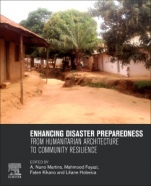
Enhancing Disaster Preparedness: From Humanitarian Architecture to Community Resilience
ISBN 9780128190784
Autor: Martins, A. NunoFayazi, MahmoodKikano, FatenHobeica, Liliane
Wydawca: Elsevier
Dostępność: 3-6 tygodni
Cena: 564,90 zł
Przed złożeniem zamówienia prosimy o kontakt mailowy celem potwierdzenia ceny.
ISBN13: |
9780128190784 |
Autor: |
Martins, A. NunoFayazi, MahmoodKikano, FatenHobeica, Liliane |
Oprawa: |
Paperback |
Rok Wydania: |
2020-10-07 |
Tematy: |
RNPG |
Enhancing Disaster Preparedness: From Humanitarian Architecture to Community Resilience relates to the fourth priority of the UNDRR’s Sendai Framework for Disaster Risk Reduction 2015–2030. Taking a wide understanding of disaster preparedness, the book deals with resilient responses and building capacities related to hazardous events, bringing some practical experiences and theoretical insights in this regard. Mostly based on field research conducted in the Global South by architects and other built-environment professionals, the book covers both post-disaster interventions (rebuilding and recovery) and development-related processes.
Its three parts address the interlinkages between humanitarian design, community resilience, and inclusive governance, which are crucial for fostering effective disaster preparedness. Part I discusses the changing roles of architects and urban designers involved in the humanitarian sphere. Part II concentrates on resilience as a socioecological capacity to enhance preparedness within community-based spatial processes. Focused on global dynamics, Part III covers topics emphasizing the link between the management of crises, whether political or economic, at different levels of governance, and the vulnerability of communities and structures on the national and local scales. As such, the book approaches rising global priorities and brings timely lessons to support building a more equitable, safe, and resilient environment in a rapidly urbanized world.
Explores Sendai’s fourth priority through a spatial lens Examines the role of humanitarian design in building resilience Critically revisits concepts such as incremental housing and building back better Provides examples of methodological tools for community engagement in resilience-building processes
PART I – Humanitarian architecture 1. A humanitarian shelter terminology framework 2. Techo’s emergency-housing response to hurricanes in Puerto Rico: Lessons from the field 3. The story of the disaster-relief houses in Iceland 4. The influence of technical assistance in the adoption of safer construction practices in Nepal 5. Participatory design for refugee shelters: An experiment in Syrian camps in Jordan 6. Lessons for Humanitarian Architecture from design contests: The case of the Building 4Humanity Design Competition PART II – Architecture and urban design to enhance community preparedness 7. Architects’ multifaceted roles in enhancing resilience after disasters 8. Probing for resilience: Exploring design with empathy in Zanzibar, Tanzania 9. Consolidation design as an adaptation strategy in the Toi Market in Nairobi, Kenya 10. Risk and urban design in Brazilian favelas: Linking participation, collective spaces, and territorial management PART III – Housing vulnerability, community resilience, and inclusive governance 11. Informality versus short-term regularization of the Syrian refugees’ situation in Lebanon 12. Incremental housing in Villa Verde, Chile: A view through the Sendai Framework lens 13. Climate Action Zones: A clustering methodology for resilient spatial planning in climate uncertainty 14. The links between vulnerability, poverty, and natural hazards: A focus on the impacts of globalization trends
Koszyk
Książek w koszyku: 0 szt.
Wartość zakupów: 0,00 zł
Informacje


Kontakt
Gambit
Centrum Oprogramowania
i Szkoleń Sp. z o.o.
Al. Pokoju 29b/22-24
31-564 Kraków
Siedziba Księgarni
ul. Kordylewskiego 1
31-542 Kraków
+48 12 410 5991
+48 12 410 5987
+48 12 410 5989
Subskrypcje
Administratorem danych osobowych jest firma Gambit COiS Sp. z o.o. Na podany adres będzie wysyłany wyłącznie biuletyn informacyjny.
Autoryzacja płatności

Informacje na temat autoryzacji płatności poprzez PayU.

© Copyright 2012: GAMBIT COiS Sp. z o.o. Wszelkie prawa zastrzeżone.
Projekt i wykonanie: Alchemia Studio Reklamy