


Wydawcy
Katalog tematyczny
- Archeologia (109)
- Ekonomia, finanse, business (13704)
- Filozofia (1445)
- Historia (3040)
- Języki i językoznawstwo (2356)
- Lifestyle, hobby i rozrywka (475)
- Medycyna (9704)
- Nauki humanistyczne (4)
- Nauki o Ziemi i środowisku (2638)
- Nauki ścisłe (20412)
- Astronomia (294)
- Biologia (5119)
- Biochemia (575)
- Biologia człowieka (14)
- Biologia komórkowa (377)
- Biologia molekularna (398)
- Biologia rozwoju (130)
- Biologia, ogólnie (1277)
- Botanika (280)
- Hydrobiologia (92)
- Mikrobiologia (363)
- Mykologia (22)
- Zoologia (303)
- Chemia (6540)
- Fizyka (3309)
- Matematyka (4574)
- Nauki ścisłe, ogólnie (503)
- Nauki społeczne (8486)
- Nauki techniczne (13450)
- Prawo (1696)
- Publikacje informacyjne i interdyscyplinarne (1288)
- Religia i wierzenia (917)
- Technika komputerowa (4067)
- Zdrowie, relacje międzyludzkie i rozwój osobisty (657)





Informacje szczegółowe o książce
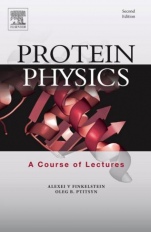
Protein Physics: A Course of Lectures
ISBN 9780128096765
Autor: Finkelstein, Alexei V.Ptitsyn, Oleg
Wydawca: Elsevier
Dostępność: 3-6 tygodni
Cena: 555,45 zł
Przed złożeniem zamówienia prosimy o kontakt mailowy celem potwierdzenia ceny.
ISBN13: |
9780128096765 |
Autor: |
Finkelstein, Alexei V.Ptitsyn, Oleg |
Oprawa: |
Paperback |
Rok Wydania: |
2016-06-27 |
Tematy: |
PSB |
Protein Physics: A Course of Lectures covers the most general problems of protein structure, folding and function. It describes key experimental facts and introduces concepts and theories, dealing with fibrous, membrane, and water-soluble globular proteins, in both their native and denatured states.
The book systematically summarizes and presents the results of several decades of worldwide fundamental research on protein physics, structure, and folding, describing many physical models that help readers make estimates and predictions of physical processes that occur in proteins.
New to this revised edition is the inclusion of novel information on amyloid aggregation, natively disordered proteins, protein folding in vivo, protein motors, misfolding, chameleon proteins, advances in protein engineering & design, and advances in the modeling of protein folding.
Further, the book provides problems with solutions, many new and updated references, and physical and mathematical appendices. In addition, new figures (including stereo drawings, with a special appendix showing how to use them) are added, making this an ideal resource for graduate and advanced undergraduate students and researchers in academia in the fields of biophysics, physics, biochemistry, biologists, biotechnology, and chemistry.
Fully revised and expanded new edition based on the latest research developments in protein physicsWritten by the world's top expert in the field Deals with fibrous, membrane, and water-soluble globular proteins, in both their native and denatured statesSummarizes, in a systematic form, the results of several decades of worldwide fundamental research on protein physics and their structure and folding Examines experimental data on protein structure in the post-genome era
Part I INTRODUCTION Lecture 1: Main functions of proteins Part II ELEMENTARY INTERACTIONS IN AND AROUND PROTEINS Lecture 2: Amino acid residues in proteins Lecture 3: Quantum mechanics, Pauli exclusion principle, and non-covalent interactions Lecture 4: Influence of water environment Lecture 5: Water, hydrophobicity and proteins Lecture 6: Influence of an aqueous environment on electrostatic interactions Part III SECONDARY STRUCTURES OF POLYPEPTIDE CHAINS Lecture 7: Secondary structure of polypeptides Lecture 8: Elements of statistical mechanics Lecture 9: Free energy of initiation and elongation of a-helices in a homopolypeptide Lecture 10: 20 + 2 + 1 gene-coded amino acids in proteins Part IV PROTEIN STRUCTURES Lecture 11: Fibrous proteins, their functions, their regular primary and secondary structures Lecture 12: Membrane proteins; peculiarities of their structure and function Lecture 13: Globular proteins Lecture 14: Structure of a-proteins Lecture 15: Classification of protein folds Lecture 16: What secondary structure can be expected for random and quasi-random amino acid sequences Part V COOPERATIVE TRANSITIONS IN PROTEIN MOLECULES Lecture 17: "Well-folded" and "natively disordered" (or "intrinsically disordered") proteins Lecture 18: Denaturation of globular protein: why is it an "all-or-none" transition Lecture 19: Protein folding in vivo and in vitro Lecture 20: Two-state folding of small proteins: kinetic analog of the thermodynamic "all-or-none" transition Lecture 21: Solution of "Levinthal paradox" Part VI PREDICTION AND DESIGN OF PROTEIN STRUCTURE Lecture 22: Protein structure prediction from amino acid sequences Lecture 23: Overview of approaches to prediction and recognition of tertiary structures of proteins from their amino acid sequences Part VII PHYSICAL BACKGROUND OF PROTEIN FUNCTIONS Lecture 24: Protein function and protein structure Lecture 25: Combination of elementary functions Appendix A.: Theory of coil-globule transitions in homopolymers Appendix B.: Theory of helix-coil transitions in homopolymers Appendix C.: Statistical physics of one-dimensional systems and dynamic programming Appendix D.: Random energy model and energy gap in the random energy model Appendix E.: How to use stereo drawings Problems & Solutions
Koszyk
Książek w koszyku: 0 szt.
Wartość zakupów: 0,00 zł
Informacje


Kontakt
Gambit
Centrum Oprogramowania
i Szkoleń Sp. z o.o.
Al. Pokoju 29b/22-24
31-564 Kraków
Siedziba Księgarni
ul. Kordylewskiego 1
31-542 Kraków
+48 12 410 5991
+48 12 410 5987
+48 12 410 5989
Subskrypcje
Administratorem danych osobowych jest firma Gambit COiS Sp. z o.o. Na podany adres będzie wysyłany wyłącznie biuletyn informacyjny.
Autoryzacja płatności

Informacje na temat autoryzacji płatności poprzez PayU.

© Copyright 2012: GAMBIT COiS Sp. z o.o. Wszelkie prawa zastrzeżone.
Projekt i wykonanie: Alchemia Studio Reklamy