


Wydawcy
Katalog tematyczny
- Archeologia (109)
- Ekonomia, finanse, business (13704)
- Filozofia (1445)
- Historia (3040)
- Języki i językoznawstwo (2356)
- Lifestyle, hobby i rozrywka (475)
- Medycyna (9704)
- Nauki humanistyczne (4)
- Nauki o Ziemi i środowisku (2638)
- Nauki ścisłe (20412)
- Nauki społeczne (8486)
- Edukacja (229)
- Kryminologia, opieka spełeczna (284)
- Obronność (10)
- Polityka (1389)
- Psychologia (777)
- Socjologia (410)
- Społeczeństwo i kultura (187)
- Nauki techniczne (13450)
- Prawo (1696)
- Publikacje informacyjne i interdyscyplinarne (1288)
- Religia i wierzenia (917)
- Technika komputerowa (4067)
- Zdrowie, relacje międzyludzkie i rozwój osobisty (657)





Informacje szczegółowe o książce
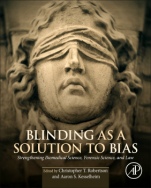
Blinding as a Solution to Bias: Strengthening Biomedical Science, Forensic Science, and Law
ISBN 9780128024607
Autor: Robertson, Christopher G.Kesselheim, Aaron
Wydawca: Elsevier
Dostępność: 3-6 tygodni
Cena: 404,25 zł
Przed złożeniem zamówienia prosimy o kontakt mailowy celem potwierdzenia ceny.
ISBN13: |
9780128024607 |
Autor: |
Robertson, Christopher G.Kesselheim, Aaron |
Oprawa: |
Hardback |
Rok Wydania: |
2016-02-02 |
Tematy: |
JKVF1 |
What information should jurors have during court proceedings to render a just decision? Should politicians know who is donating money to their campaigns? Will scientists draw biased conclusions about drug efficacy when they know more about the patient or study population? The potential for bias in decision-making by physicians, lawyers, politicians, and scientists has been recognized for hundreds of years and drawn attention from media and scholars seeking to understand the role that conflicts of interests and other psychological processes play. However, commonly proposed solutions to biased decision-making, such as transparency (disclosing conflicts) or exclusion (avoiding conflicts) do not directly solve the underlying problem of bias and may have unintended consequences.
Robertson and Kesselheim bring together a renowned group of interdisciplinary scholars to consider another way to reduce the risk of biased decision-making: blinding. What are the advantages and limitations of blinding? How can we quantify the biases in unblinded research? Can we develop new ways to blind decision-makers? What are the ethical problems with withholding information from decision-makers in the course of blinding? How can blinding be adapted to legal and scientific procedures and in institutions not previously open to this approach? Fundamentally, these sorts of questions—about who needs to know what—open new doors of inquiry for the design of scientific research studies, regulatory institutions, and courts.
The volume surveys the theory, practice, and future of blinding, drawing upon leading authors with a diverse range of methodologies and areas of expertise, including forensic sciences, medicine, law, philosophy, economics, psychology, sociology, and statistics.
Introduces readers to the primary policy issue this book seeks to address: biased decision-making.Provides a focus on blinding as a solution to bias, which has applicability in many domains. Traces the development of blinding as a solution to bias, and explores the different ways blinding has been employed.Includes case studies to explore particular uses of blinding for statisticians, radiologists, and fingerprint examiners, and whether the jurors and judges who rely upon them will value and understand blinding.
Blinding as a Solution to Bias, 1st Edition
BLINDING AND BIAS
Chapter 1. A Primer on the Psychology of Cognitive Bias (Carla Lindsay MacLean and Itiel Dror)
Chapter 2. Why Blinding? How Blinding? A Theory of Blinding and Its Application to Institutional Corruption (Christopher Robertson)
BIOMEDICAL SCIENCE
Chapter 3. From Trials to Trials: Blinding, Medicine, and Honest Adjudication (Scott H. Podolsky, David S. Jones, and Ted J. Kaptchuk)
Chapter 4. Blinding in Biomedical Research: An Essential Method to Reduce Risk of Bias (Asbjorn Hrobjartsson)
Chapter 5. Blind Peer Review by Academic Journals (Emily A. Largent and Richard T. Snodgrass)
Chapter 6. Clinical Trial Blinding in the Age of Social Media (Paul Wicks)
Chapter 7. The Ethics of Single-Blind Trials in Biomedicine (Franklin G. Miller)
Chapter 8: “Money Blinding” as a Solution to Biased Design and Conduct of Scientific Research (Christopher Robertson and Marc A. Rodwin)
FORENSIC SCIENCE: CRIMINAL AND CIVIL
Chapter 9. Determining the Proper Evidentiary Basis for an Expert Opinion: What Do Experts Need to Know and When Do They Know Too Much? (William C. Thompson)
Chapter 10. Minimizing and Leveraging Bias in Forensic Science (Roger Koppl and Dan Krane)
Chapter 11. What Do Statisticians Really Need to Know, and When Do They Need to Know It? (D. James Greiner)
Chapter 12. Using Blind Reviews to Address Biases in Medical Malpractice (Jeffrey D. Robinson)
Chapter 13. Mock Juror and Jury Assessment of Blinded Expert Witnesses (Megan S. Wright, Christopher Robertson, and David V. Yokum)
Chapter 14. Disclosure Discretion and Selection Bias in Blinding of Experts (Christopher Robertson)
BLINDING IN LEGAL INSTITUTIONS
Chapter 15. Why Eyes? Cautionary Tales from Law’s Blindfolded Justice (Judith Resnik and Dennis Curtis)
Chapter 16. A Theory of Anonymity (Jeffery M. Skopek)
Chapter 17. The Cases for and Against Blindfolding the Jury (Shari Seidman Diamond)
Chapter 18. The Compliance Equation: Creating a More Ethical and Equitable Campaign Financing System by Blinding Contributions to Federal Candidates (Bertram Levine and Michael Johnston)
Chapter 19. Blinding Eyewitness Identifications (Brandon Garrett)
Chapter 20. Blind Appointments in Arbitration (Sergio Puig)
Chapter 21. Psychological Obstacles to the Judicial Disqualification Inquiry,and Blinded Review was an Aid (David V. Yokum)
Chapter 22. Masking Information Source Within the Internal Revenue Service (Karie Davis-Nozemack)
Chapter 23. Blinding the Law: The Potential Virtue of Legal Uncertainty (Yuval Feldman and Shahar Lifshitz)
Koszyk
Książek w koszyku: 0 szt.
Wartość zakupów: 0,00 zł
Informacje


Kontakt
Gambit
Centrum Oprogramowania
i Szkoleń Sp. z o.o.
Al. Pokoju 29b/22-24
31-564 Kraków
Siedziba Księgarni
ul. Kordylewskiego 1
31-542 Kraków
+48 12 410 5991
+48 12 410 5987
+48 12 410 5989
Subskrypcje
Administratorem danych osobowych jest firma Gambit COiS Sp. z o.o. Na podany adres będzie wysyłany wyłącznie biuletyn informacyjny.
Autoryzacja płatności

Informacje na temat autoryzacji płatności poprzez PayU.

© Copyright 2012: GAMBIT COiS Sp. z o.o. Wszelkie prawa zastrzeżone.
Projekt i wykonanie: Alchemia Studio Reklamy