


Wydawcy
Katalog tematyczny
- Archeologia (109)
- Ekonomia, finanse, business (13704)
- Filozofia (1445)
- Historia (3040)
- Języki i językoznawstwo (2356)
- Lifestyle, hobby i rozrywka (475)
- Medycyna (9704)
- Nauki humanistyczne (4)
- Nauki o Ziemi i środowisku (2638)
- Nauki ścisłe (20412)
- Nauki społeczne (8486)
- Edukacja (229)
- Kryminologia, opieka spełeczna (284)
- Obronność (10)
- Polityka (1389)
- Psychologia (777)
- Socjologia (410)
- Społeczeństwo i kultura (187)
- Nauki techniczne (13450)
- Prawo (1696)
- Publikacje informacyjne i interdyscyplinarne (1288)
- Religia i wierzenia (917)
- Technika komputerowa (4067)
- Zdrowie, relacje międzyludzkie i rozwój osobisty (657)





Informacje szczegółowe o książce
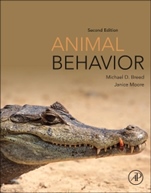
Animal Behavior
ISBN 9780128015322
Autor: Breed, Michael D.Moore, Janice
Wydawca: Elsevier
Dostępność: 3-6 tygodni
Cena: 362,25 zł
Przed złożeniem zamówienia prosimy o kontakt mailowy celem potwierdzenia ceny.
ISBN13: |
9780128015322 |
ISBN10: |
0128015322 |
Autor: |
Breed, Michael D.Moore, Janice |
Oprawa: |
Paperback |
Rok Wydania: |
2015-07-29 |
Tematy: |
JFFZ |
Animal Behavior, Second Edition, covers the broad sweep of animal behavior from its neurological underpinnings to the importance of behavior in conservation. The authors, Michael Breed and Janice Moore, bring almost 60 years of combined experience as university professors to this textbook, much of that teaching animal behavior.
An entire chapter is devoted to the vibrant new field of behavior and conservation, including topics such as social behavior and the relationship between parasites, pathogens, and behavior. Thoughtful coverage has also been given to foraging behavior, mating and parenting behavior, anti-predator behavior, and learning.
This text addresses the physiological foundations of behavior in a way that is both accessible and inviting, with each chapter beginning with learning objectives and ending with thought-provoking questions.
Additionally, special terms and definitions are highlighted throughout. Animal Behavior provides a rich resource for students (and professors) from a wide range of life science disciplines.
Provides a rich resource for students and professors from a wide range of life science disciplinesUpdated and revised chapters, with at least 50% new case studies and the addition of contemporary in-text examplesExpanded and updated coverage of animal welfare topicsIncludes behavior and homeostatic mechanisms, behavior and conservation, and behavioral aspects of diseaseAvailable lab manual with fully developed and tested laboratory exercisesCompanion website includes newly developed slide sets/templates (PowerPoints) coordinated with the book
- Dedication
- Preface
- Chapter 1. Of Cockroaches and Wolves: Framing Animal Behavior
- Learning Objectives
- 1.1 Introduction: Animal Behavior
- 1.2 Wolves: Lessons in Social Behavior
- 1.3 Cockroaches: Models for Animal Behavior
- 1.4 The Four Questions Revisited
- 1.5 Evolution: A Review
- 1.6 The Study of Animal Behavior: Where Did it Come From?
- 1.7 Umwelt: The World in Which Animals Behave
- Summary
- Study Questions
- Further Reading
- Chapter 2. Neurobiology and Endocrinology for Animal Behaviorists
- Learning Objectives
- 2.1 Neurobiology, Endocrinology, and Sensory Systems: An Overview
- 2.2 What Does an Animal Behaviorist Need to Know About Neurobiology?
- 2.3 What Does an Animal Behaviorist Need to Know About Endocrinology?
- 2.4 What Does an Animal Behaviorist Need to Know About Sensory Systems?
- Summary
- Study Questions
- Further Reading
- Notes
- Chapter 3. Behavioral Genetics
- Learning Objectives
- 3.1 Introduction: Principles of Behavioral Genetics
- 3.2 The Nature Versus Nurture Debate
- 3.3 Domestication
- 3.4 Phylogeny
- 3.5 Classical and Mendelian Genetics
- 3.6 Quantitative and Biometrical Genetics
- 3.7 Evolutionary and Population Genetics
- 3.8 Molecular Genetics
- Summary
- Study Questions
- Further Reading
- Notes
- Chapter 4. Homeostasis and Time Budgets
- Learning Objectives
- 4.1 Introduction
- 4.2 Drive Theory and Homeostasis
- 4.3 Behavioral Syndromes, Personality, Emotion, and Mood
- 4.4 Biological Clocks and Circadian Rhythms
- 4.5 Modern Concepts of Homeostatic Regulation
- 4.6 Time Budgets and Trade-Offs: Balancing Demands in How Animals Budget Their Time
- Summary
- Study Questions
- Further Reading
- Notes
- Chapter 5. Learning
- Learning Objectives
- 5.1 Introduction
- 5.2 Learning and Memory
- 5.3 Basic Models for Learning
- 5.4 Social Learning: Traditions and “Cultural” Transmission of Information in Animals
- 5.5 Play, Learning, and Development
- Summary
- Study Questions
- Further Reading
- Notes
- Chapter 6. Cognition
- Learning Objectives
- 6.1 Introduction: What Is Cognition
- 6.2 The Concept of Self
- 6.3 Thought, Foresight, and Problem Solving
- 6.4 Intelligence and Social Cognition
- 6.5 The Frontal Lobe and Impulse Control
- 6.6 Animal Emotions
- 6.7 Are Cognitive Abilities Under- or Over-Attributed to Animals?
- Summary
- Study Questions
- Further Reading
- Notes
- Chapter 7. Communication
- Learning Objectives
- 7.1 Introduction: Communication Theory
- 7.2 Evolution of Communication
- 7.3 Modes of Communication
- 7.4 Multimodal Signaling and Encoding Complex Messages
- 7.5 Runaway Sexual Selection and Signaling
- 7.6 Deceit Versus Honest Signaling
- 7.7 Game Theory and Communication
- 7.8 Interspecific Signaling
- Summary
- Study Questions
- Further Reading
- Notes
- Chapter 8. Movement: Search, Navigation, Migration, and Dispersal
- Learning Objectives
- 8.1 Introduction
- 8.2 Sources of Navigational Information
- 8.3 Sensing the Environment in Time and Space
- 8.4 How to Respond to Sensory Information: A Toolbox for Finding the Way
- 8.5 Search
- 8.6 Homing
- 8.7 Migration
- 8.8 Dispersal
- Summary
- Study Questions
- Further Reading
- Notes
- Chapter 9. Foraging
- Learning Objectives
- 9.1 Introduction
- 9.2 Diet Choice and Food Selection
- 9.3 How Animals Get Food
- 9.4 Willing Food
- 9.5 Manipulation of Prey
- 9.6 Parasitic Life Cycles
- 9.7 Foraging and Optimality Theory
- 9.8 Optimal Patch Choice
- 9.9 Optimal Prey Choice
- 9.10 Nutritional Constraints
- Summary
- Study Questions
- Further Reading
- Notes
- Chapter 10. Self-Defense
- Learning Objectives
- 10.1 Introduction
- 10.2 Cryptic Behavior: Camouflage
- 10.3 Vigilance and Alarm
- 10.4 Mimicry and Diversion
- 10.5 Evasion
- 10.6 Predator Deterrence and Fighting Back
- 10.7 Pathogen Avoidance/Deterrence and Sickness Behavior
- Summary
- Study Questions
- Further Reading
- Notes
- Chapter 11. Mating Systems
- Learning Objectives
- 11.1 Introduction
- 11.2 Evolution of Sex: Why Some Animals Are Called Male and Others Female
- 11.3 Sexual Selection
- 11.4 Variance in Mating Success
- 11.5 Mate Choice
- 11.6 Mating Systems: How Many Males, How Many Females?
- 11.7 Hormones and Sexual Behavior
- 11.8 Hormones, Territoriality, and Aggression
- 11.9 Sperm Competition
- 11.10 Good Genes Models for Choosing a Mate
- 11.11 Forced Copulations
- Summary
- Study Questions
- Further Reading
- Notes
- Chapter 12. Nesting, Parenting, and Territoriality
- Learning Objectives
- 12.1 Introduction
- 12.2 Nests and Nesting
- 12.3 Parental Investment
- 12.4 Patterns of Parental Care
- 12.5 Hormones and Parental Behavior
- 12.6 Parenting and Conflicts of Interest
- 12.7 Begging and Weaning Conflict
- 12.8 Sibling Conflict
- 12.9 Infanticide
- 12.10 Aggression and Territoriality
- Summary
- Study Questions
- Further Reading
- Notes
- Chapter 13. Social Behavior, Cooperation, and Kinship
- Learning Objectives
- 13.1 Introduction
- 13.2 Altruism or Selfish Interests?
- 13.3 Schools, Flocks, Hordes, and Herds
- 13.4 Social Network Analysis
- 13.5 Explaining Cooperation
- 13.6 Extreme Cooperation: Eusociality
- 13.7 Lack of Ecological Choice in Aid-Giving Decisions
- 13.8 Social Recognition, Kin Recognition, and Cooperation with Close Relatives
- 13.9 Social Symbioses
- Summary
- Study Questions
- Further Reading
- Notes
- Chapter 14. Comparative Social Behavior
- Learning Objectives
- 14.1 Introduction
- 14.2 Vertebrate Social Systems
- 14.3 Invertebrate Eusociality: Workers and the Division of Labor
- 14.4 Invertebrate Eusociality: Queens and Reproduction
- 14.5 Invertebrate Eusociality: Colony Defense
- 14.6 Eusocial Invertebrates
- Summary
- Study Questions
- Further Reading
- Notes
- Chapter 15. Conservation and Behavior
- Learning Objectives
- 15.1 Introduction: Conservation and the Future of Animal Behavior
- 15.2 Species Protection in Natural Habitats
- 15.3 Extinctions and Behavior
- 15.4 Reserve Design
- 15.5 Captive Breeding Programs and Reintroductions
- 15.6 Human–Wildlife Interface in the Suburbs
- Summary: The Future and Conservation Behavior
- Study Questions
- Further Reading
- Notes
- Index
Koszyk
Książek w koszyku: 0 szt.
Wartość zakupów: 0,00 zł
Informacje


Kontakt
Gambit
Centrum Oprogramowania
i Szkoleń Sp. z o.o.
Al. Pokoju 29b/22-24
31-564 Kraków
Siedziba Księgarni
ul. Kordylewskiego 1
31-542 Kraków
+48 12 410 5991
+48 12 410 5987
+48 12 410 5989
Subskrypcje
Administratorem danych osobowych jest firma Gambit COiS Sp. z o.o. Na podany adres będzie wysyłany wyłącznie biuletyn informacyjny.
Autoryzacja płatności

Informacje na temat autoryzacji płatności poprzez PayU.

© Copyright 2012: GAMBIT COiS Sp. z o.o. Wszelkie prawa zastrzeżone.
Projekt i wykonanie: Alchemia Studio Reklamy