


Wydawcy
Katalog tematyczny
- Archeologia (109)
- Ekonomia, finanse, business (13704)
- Filozofia (1445)
- Historia (3040)
- Języki i językoznawstwo (2356)
- Lifestyle, hobby i rozrywka (475)
- Medycyna (9704)
- Nauki humanistyczne (4)
- Nauki o Ziemi i środowisku (2638)
- Nauki ścisłe (20412)
- Nauki społeczne (8486)
- Nauki techniczne (13450)
- Prawo (1696)
- Publikacje informacyjne i interdyscyplinarne (1288)
- Religia i wierzenia (917)
- Technika komputerowa (4067)
- Zdrowie, relacje międzyludzkie i rozwój osobisty (657)





Informacje szczegółowe o książce
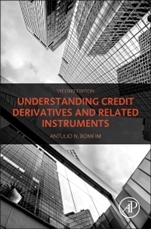
Understanding Credit Derivatives and Related Instruments
ISBN 9780128001165
Autor: Bomfim, Antulio N.
Wydawca: Elsevier
Dostępność: 3-6 tygodni
Cena: 460,95 zł
Przed złożeniem zamówienia prosimy o kontakt mailowy celem potwierdzenia ceny.
ISBN13: |
9780128001165 |
ISBN10: |
012800116X |
Autor: |
Bomfim, Antulio N. |
Oprawa: |
Hardback |
Rok Wydania: |
2015-11-17 |
Tematy: |
KFFK |
Understanding Credit Derivatives and Related Instruments, Second Edition is an intuitive, rigorous overview that links the practices of valuing and trading credit derivatives with academic theory. Rather than presenting highly technical explorations, the book offers summaries of major subjects and the principal perspectives associated with them.
The book's centerpiece is pricing and valuation issues, especially valuation tools and their uses in credit models. Five new chapters cover practices that have become commonplace as a result of the 2008 financial crisis, including standardized premiums and upfront payments. Analyses of regulatory responses to the crisis for the credit derivatives market (Basel III, Dodd-Frank, etc.) include all the necessary statistical and mathematical background for readers to easily follow the pricing topics.
Every reader familiar with mid-level mathematics who wants to understand the functioning of the derivatives markets (in both practical and academic contexts) can fully satisfy his or her interests with the comprehensive assessments in this book.
Explores the role that credit derivatives played during the economic crisis, both as hedging instruments and as vehicles that potentially magnified losses for some investors Comprehensive overview of single-name and multi-name credit derivatives in terms of market specifications, pricing techniques, and regulatory treatment Updated edition uses current market statistics (market size, market participants, and uses of credit derivatives), covers the application of CDS technology to other asset classes (CMBX, ABX, etc.), and expands the treatment of individual instruments to cover index products, and more
- Part I: Credit Derivatives: Definition, Market, Uses
- Chapter 1: Credit Derivatives: A Brief Overview
- Abstract
- 1.1 What Are Credit Derivatives?
- 1.2 Potential “Gains from Trade”
- 1.3 Types of Credit Derivatives
- 1.4 Valuation Principles
- 1.5 Counterparty Credit Risk (Again)
- Chapter 2: The Credit Derivatives Market
- Abstract
- 2.1 Evolution and Size of the Market
- 2.2 Market Activity and Size by Instrument Type
- 2.3 Main Market Participants
- 2.4 Common Market Practices
- Chapter 3: Main Uses of Credit Derivatives
- Abstract
- 3.1 Credit Risk Management by Banks
- 3.2 Managing Bank Regulatory Capital
- 3.3 Yield Enhancement, Portfolio Diversification
- 3.4 Shorting Corporate Bonds
- 3.5 Other Uses of Credit Derivatives
- 3.6 Credit Derivatives as Market Indicators
- Chapter 1: Credit Derivatives: A Brief Overview
- Part II: Main Types of Credit Derivatives
- Chapter 4: Floating-Rate Notes
- Abstract
- 4.1 Not a Credit Derivative…
- 4.2 How Does It Work?
- 4.3 Common Uses
- 4.4 Valuation Considerations
- 4.5 A Primer on Interest Rate and Spread Sensitivities
- Chapter 5: Asset Swaps
- Abstract
- 5.1 A Borderline Credit Derivative…
- 5.2 How Does It Work?
- 5.3 Common Uses
- 5.4 Valuation Considerations
- Chapter 6: Credit Default Swaps
- Abstract
- 6.1 How Does It Work?
- 6.2 Common Uses
- 6.3 Valuation Considerations
- 6.4 Variations on the Basic Structure
- 6.5 Upfront Payments and Standardized Spreads
- Chapter 7: Total Return Swaps
- Abstract
- 7.1 How Does It Work?
- 7.2 Common Uses
- 7.3 Valuation Considerations
- 7.4 Variations on the Basic Structure
- Chapter 8: Spread and Bond Options
- Abstract
- 8.1 How Does It Work?
- 8.2 Common Uses
- 8.3 Valuation Considerations
- 8.4 Variations on Basic Structures
- Chapter 9: Basket Default Swaps
- Abstract
- 9.1 How Does It Work?
- 9.2 Common Uses
- 9.3 Valuation Considerations
- 9.4 Variations on the Basic Structure
- Chapter 10: Portfolio Default Swaps
- Abstract
- 10.1 How Does It Work?
- 10.2 Common Uses
- 10.3 Valuation Considerations
- 10.4 Variations on the Basic Structure
- Chapter 11: Principal-Protected Structures
- Abstract
- 11.1 How Does It Work?
- 11.2 Common Uses
- 11.3 Valuation Considerations
- 11.4 Variations on the Basic Structure
- Chapter 12: Credit-Linked Notes
- Abstract
- 12.1 How Does It Work?
- 12.2 Common Uses
- 12.3 Valuation Considerations
- 12.4 Variations on the Basic Structure
- Chapter 13: Repackaging Vehicles
- Abstract
- 13.1 How Does It Work?
- 13.2 Why Use Repackaging Vehicles?
- 13.3 Valuation Considerations
- 13.4 Variations on the Basic Structure
- Chapter 14: Synthetic CDOs
- Abstract
- 14.1 Traditional CDOs
- 14.2 Synthetic Securitization
- Chapter 15: CDS Indexes
- Abstract
- 15.1 How Does It Work?
- 15.2 Common Uses
- 15.3 Valuation Considerations
- 15.4 Variations on the Basic Structure
- Chapter 16: CDS on Commercial Mortgages and Subprime Residential Mortgages
- Abstract
- 16.1 How Does It Work?
- 16.2 ABS/CMBS CDS Indexes: ABX and CMBX
- 16.3 Common Uses
- 16.4 Valuation Considerations
- 16.5 ABS/CMBS CDS and the 2008 Financial Crisis
- 16.6 Variations on the Basic Structure
- Chapter 4: Floating-Rate Notes
- Part III: Introduction to Credit Modeling I: Single-Name Defaults
- Chapter 17: Valuing Defaultable Bonds
- Abstract
- 17.1 Zero-Coupon Bonds
- 17.2 Risk-Neutral Valuation and Probability
- 17.3 Coupon-Paying Bonds
- 17.4 Nonzero Recovery
- 17.5 Risky Bond Spreads
- 17.6 Recovery Rates
- Chapter 18: The Credit Curve
- Abstract
- 18.1 CDS-Implied Credit Curves
- 18.2 Marking to Market a CDS Position
- 18.3 Valuing Upfront Payments
- 18.4 Valuing a Principal-Protected Note
- 18.5 Accrued Premiums
- 18.6 Other Applications and Some Caveats
- Chapter 19: Main Credit Modeling Approaches
- Abstract
- 19.1 Structural Approach
- 19.2 Reduced-form Approach
- 19.3 Comparing the Two Main Approaches
- 19.4 Ratings-Based Models
- Chapter 20: Valuing Credit Options
- Abstract
- 20.1 Forward-Starting Contracts
- 20.2 Valuing Credit Default Swaptions
- 20.3 Valuing Other Credit Options
- 20.4 Alternative Valuation Approaches
- 20.5 Valuing Bond Options
- Chapter 17: Valuing Defaultable Bonds
- Part IV: Introduction to Credit Modeling II: Portfolio Credit Risk
- Chapter 21: The Basics of Portfolio Credit Risk
- Abstract
- 21.1 Default Correlation
- 21.2 The Loss Distribution Function
- 21.3 Default Correlation and Loss Distribution
- 21.4 Monte Carlo Simulation: Brief Overview
- 21.5 Conditional vs. Unconditional Loss Distributions
- 21.6 Extensions and Alternative Approaches
- Chapter 22: Valuing Basket Default Swaps
- Abstract
- 22.1 Basic Features of Basket Swaps
- 22.2 Reexamining the Two-Asset FTD Basket
- 22.3 FTD Basket with Several Reference Entities
- 22.4 The Second-to-Default Basket
- 22.5 Basket Valuation and Asset Correlation
- 22.6 Extensions and Alternative Approaches
- Chapter 23: Valuing Portfolio Swaps and CDOs
- Abstract
- 23.1 A Simple Numerical Example
- 23.2 Model-Based Valuation Exercise
- 23.3 The Effects of Asset Correlation
- 23.4 The Large-Portfolio Approximation
- 23.5 Valuing CDOs: Some Basic Insights
- 23.6 Concluding Remarks
- Chapter 24: A Quick Tour of Commercial Models
- Abstract
- 24.1 CreditMetrics
- 24.2 The KMV Framework
- 24.3 CreditRisk+
- 24.4 Moody’s Binomial Expansion Technique
- 24.5 Concluding Remarks
- Chapter 25: Modeling Counterparty Credit Risk
- Abstract
- 25.1 The Single-Name CDS as a “Two-Asset Portfolio”
- 25.2 The Basic Model
- 25.3 A CDS with No Counterparty Credit Risk
- 25.4 A CDS with Counterparty Credit Risk
- 25.5 Other Models and Approaches
- 25.6 Counterparty Credit Risk in MultiName Structures
- 25.7 Concluding Thoughts
- Chapter 21: The Basics of Portfolio Credit Risk
- Part V: A Brief Overview of Documentation and Regulatory Issues
- Chapter 26: Anatomy of a CDS Transaction
- Abstract
- 26.1 Standardization of CDS Documentation
- 26.2 When a Credit Event Takes Place…
- 26.3 A Bit of Market History: The Restructuring Debate
- Chapter 27: A Primer on Regulatory Issues
- Abstract
- 27.1 The Basel II and Basel III Capital Accords
- 27.2 Bank II Risk Weights and Credit Derivatives
- 27.3 Basel III and Counterparty Credit Risk
- 27.4 Suggestions for Further Reading on Banking Issues
- 27.5 Beyond Banks: The Evolving Regulatory Landscape
- Chapter 26: Anatomy of a CDS Transaction
- Part VI: Hedging and Trading Credit Default Swaps
- Chapter 28: Measuring the Risks Embedded in a CDS Position
- Abstract
- 28.1 Review of a Key Marking-to-Market Result
- 28.2 The Protection Seller’s Perspective
- 28.3 Risk Sensitivities: Basic Concepts
- 28.4 Risk Sensitivities: Numerical Examples
- 28.5 Extensions and Variations
- Chapter 29: Portfolio-Level Risks and Basic CDS Hedging
- Abstract
- 29.1 Risk Sensitivities at the Portfolio Level
- 29.2 Interactions Between Spread and Default Risks
- 29.3 A Digression: What’s in a CDS Spread?
- 29.4 A Simple CDS Hedging Strategy
- 29.5 A Brief Look at a CDS Trade
- 29.6 Extensions and Variations
- Chapter 30: Trading the CDS Curve
- Abstract
- 30.1 A Closer Look at the P&L of a CDS Position
- 30.2 A Simple Curve Trade
- 30.3 Spread-Duration-Neutral Curve Trades
- 30.4 Extensions and Additional Considerations
- Chapter 28: Measuring the Risks Embedded in a CDS Position
- Appendix A: Basic Concepts from Bond Math
- A.1 Zero-Coupon Bonds
- A.2 Compounding
- A.3 Zero-Coupon Bond Prices as Discount Factors
- A.4 Coupon-Paying Bonds
- A.5 Inferring Zero-Coupon Yields from the Coupon Curve
- A.6 Forward Rates
- A.7 Forward Interest Rates and Bond Prices
- Appendix B: Basic Concepts from Statistics
- B.1 Cumulative Distribution Function
- B.2 Probability Function
- B.3 Probability Density Function
- B.4 Expected Value and Variance
- B.5 Bernoulli Trials and the Bernoulli Distribution
- B.6 The Binomial Distribution
- B.7 The Poisson and Exponential Distributions
- B.8 The Normal Distribution
- B.9 The Lognormal Distribution
- B.10 Joint Probability Distributions
- B.11 Independence
- B.12 The Bivariate Normal Distribution
- Bibliography
Koszyk
Książek w koszyku: 0 szt.
Wartość zakupów: 0,00 zł
Informacje


Kontakt
Gambit
Centrum Oprogramowania
i Szkoleń Sp. z o.o.
Al. Pokoju 29b/22-24
31-564 Kraków
Siedziba Księgarni
ul. Kordylewskiego 1
31-542 Kraków
+48 12 410 5991
+48 12 410 5987
+48 12 410 5989
Subskrypcje
Administratorem danych osobowych jest firma Gambit COiS Sp. z o.o. Na podany adres będzie wysyłany wyłącznie biuletyn informacyjny.
Autoryzacja płatności

Informacje na temat autoryzacji płatności poprzez PayU.

© Copyright 2012: GAMBIT COiS Sp. z o.o. Wszelkie prawa zastrzeżone.
Projekt i wykonanie: Alchemia Studio Reklamy