


Wydawcy
Katalog tematyczny
- Archeologia (109)
- Ekonomia, finanse, business (13704)
- Filozofia (1445)
- Historia (3040)
- Języki i językoznawstwo (2356)
- Lifestyle, hobby i rozrywka (475)
- Medycyna (9704)
- Nauki humanistyczne (4)
- Nauki o Ziemi i środowisku (2638)
- Nauki ścisłe (20412)
- Nauki społeczne (8486)
- Nauki techniczne (13450)
- Budownictwo lądowe (1045)
- Budownictwo komunikacyjne (9)
- Hydraulika (33)
- Konstrukcje budowlane (95)
- Mechanika konstrukcji (182)
- Przemysł budowlany (7)
- Chemia przemysłowa (2258)
- Elektronika i telekomunikacja (3287)
- Energetyka (1122)
- Inne nauki stosowane (363)
- Inżynieria biochemiczna (507)
- Inżynieria transportu (232)
- Mechanika i materiały (3316)
- Nauka o środowisku (321)
- Rolnictwo (507)
- Technika, ogólnie (475)
- Prawo (1696)
- Publikacje informacyjne i interdyscyplinarne (1288)
- Religia i wierzenia (917)
- Technika komputerowa (4067)
- Zdrowie, relacje międzyludzkie i rozwój osobisty (657)





Informacje szczegółowe o książce
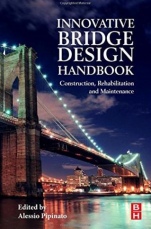
Innovative Bridge Design Handbook: Construction, Rehabilitation and Maintenance
ISBN 9780128000588
Autor: Pipinato, Alessio
Wydawca: Elsevier
Dostępność: 3-6 tygodni
Cena: 583,80 zł
Przed złożeniem zamówienia prosimy o kontakt mailowy celem potwierdzenia ceny.
ISBN13: |
9780128000588 |
ISBN10: |
0128000589 |
Autor: |
Pipinato, Alessio |
Oprawa: |
Paperback |
Rok Wydania: |
2016-02-08 |
Tematy: |
TNCJ |
As known, each bridge presents a unique set of design, construction, and maintenance challenges. The designer must determine the appropriate methods and level of refinement necessary to design and analyze each bridge on a case-by-case basis. The Innovative Bridge Design Handbook: Construction, Rehabilitation, and Maintenance encompasses the state of the art in bridge design, construction, maintenance, and safety assessment. Written by an international group of experts, this book provides innovative design approaches used in various parts of the world and explores concepts in design, construction, and maintenance that will reduce project costs and increase structural safety and durability. Furthermore, research and innovative solutions are described throughout chapters.
The Innovative Bridge Design Handbook: Construction, Rehabilitation, and Maintenance brings together the specific knowledge of a bevy of experts and academics in bridge engineering in the areas of design, assessment, research, and construction. The handbook begins with an analysis of the history and development of bridge aesthetics and design; various types of loads including seismic and wind loads are then described, together with fatigue and fracture. Bridge design based on material such as reinforced concrete, prestressed reinforced concrete, steel and composite, timber, masonry bridges is analyzed and detailed according to international codes and standards. Then bridge design based on geometry, such as arch bridges, girders, cable stayed and suspension bridges, is illustrated. This is followed by a discussion of a number of special topics, including integral, movable, highway and railway bridges, together with seismic component devices, cables, orthotropic decks, foundations, and case studies. Finally, bridge construction equipment, bridge assessment retrofit and management, bridge monitoring, fiber-reinforced polymers to reinforce bridges, bridge collapse issues are covered.
Loads including seismic and wind loads, fatigue and fracture, local effectsStructural analysis including numerical methods (FEM), dynamics, risk and reliability, innovative structural typologiesBridge design based on material type: RC and PRC, steel and composite, timber and masonry bridgesBridge design based on geometry: arch bridges, girders, cable stayed and suspension bridgesSpecial topics: integral, movable, highway, railway bridges, seismic component devices, cables, orthotropic decks, foundationsConstruction including construction case studies, construction equipment, bridge assessment, bridge management, retrofit and strengthening, monitoring procedures
- Dedication
- Contributor details
- Foreword
- Preface
- Note
- Section I: Fundamentals
- Chapter 1: The history, aesthetics, and design of bridges
- Abstract
- 1 History of bridge structures
- 2 Bridge design and aesthetic
- 3 Research and innovation in bridge design
- Chapter 1: The history, aesthetics, and design of bridges
- Section II: Loads on bridges
- Chapter 2: Loads on bridges
- Abstract
- 1 Introduction
- 2 Primary loads
- 3 Environmental effects
- 4 Dynamic amplification
- 5 Bridge redundancy
- 6 Conclusions
- Chapter 3: Wind loads
- Abstract
- 1 Introduction
- 2 Overview of wind effects on bridges
- 3 Procedure of wind-resistant design
- 4 Design wind speeds provided in design codes
- 5 Wind loads provided in design codes
- 6 Wind tunnel test and CFD
- 7 Vortex-induced vibration and its countermeasures
- 8 Verification of buffeting analysis based on field measurements
- 9 Wind-induced vibrations of stay cables
- 10 Conclusions
- Chapter 4: Fatigue and fracture
- Abstract
- 1 Introduction
- 2 Structural redundancy and safety
- 3 Codes and standards
- 4 Fatigue and fracture resistance of steel and concrete bridges
- 5 Traffic loading and action effects on bridge elements
- 6 Common failures
- 7 Crack detection, intervention methods, and techniques
- 8 Research on fatigue and fracture
- Chapter 2: Loads on bridges
- Section III: Structural analysis
- Chapter 5: Bridge structural theory and modeling
- Abstract
- 1 Introduction
- 2 Structural theory
- 3 Structural modeling
- 4 Research and development
- Chapter 6: Dynamics of bridge structures
- Abstract
- Acknowledgments
- 1 Linear idealization of bridge structures
- 2 Bridge response to dynamic loading
- 3 Influence of supporting soil
- 4 Bridge integrity: consequences of relative response of adjacent bridge structures
- 5 Conclusions
- Chapter 7: Risk and reliability in bridges
- Abstract
- 1 Overview
- 2 Uncertainty in bridge modeling and assessment
- 3 Reliability of bridges
- 4 Reliability-based design codes of bridges
- 5 Bridge life cycle cost and optimization
- 6 Load and resistance factor rating methodology
- Summary
- Chapter 8: Innovative structural typologies
- Abstract
- 1 Introduction: aim and context
- 2 Literature review
- 3 3D bridges force-modeled for one loading condition
- 4 3D bridges, optimized for one or more criteria and composed of surface elements
- 5 Future prospects and conclusions: role of the designer and the toolbox
- Chapter 5: Bridge structural theory and modeling
- Section IV: Bridge design based on construction material type
- Chapter 9: Reinforced and prestressed concrete bridges
- Abstract
- 1 Types of reinforced concrete bridges
- 2 Prestressing in bridges
- 3 Design of reinforced and prestressed concrete bridge decks
- 4 Methods of construction
- 5 Design example
- 6 Research and development
- Chapter 10: Steel and composite bridges
- Abstract
- 1 Introduction
- 2 Design
- 3 Product specifications
- 4 Structural connections
- 5 Steel bridge analysis
- 6 Composite bridge analysis
- 7 Truss bridges analysis
- 8 Research and development
- Chapter 11: Timber bridges
- Abstract
- 1 Wood used in bridges
- 2 Wood as structural material
- 3 Design of timber components
- 4 Design of connections
- 5 Design of modern timber bridges
- 6 Design verifications of timber bridges
- 7 Design and durability
- Chapter 12: Masonry bridges
- Abstract
- 1 Structural theory of masonry structures
- 2 Assessment of the load-carrying capacity of arch masonry bridges
- 3 Analysis, repair, and strengthening
- 4 Structural assessment and retrofit
- Chapter 9: Reinforced and prestressed concrete bridges
- Section V: Bridge design based on geometry
- Chapter 13: Arch bridges
- Abstract
- 1 Introduction
- 2 Deck arch bridges
- 3 Tied arch bridges
- Chapter 14: Girders
- Abstract
- 1 Introduction
- 2 Planning
- 3 Preliminary bridge design
- 4 Final design
- 5 Construction
- 6 Preservation
- 7 Innovation
- 8 Conclusions
- Chapter 15: Long-span bridges
- Abstract
- 1 Introduction
- 2 Cable stayed bridges
- 3 Suspension bridges
- 4 Limits of long-span bridges
- Chapter 13: Arch bridges
- Section VI: Special topics
- Chapter 16: Integral bridges
- Abstract
- 1 Introduction
- 2 Historical background
- 3 Modern integral bridges
- 4 Thermal effects on integral bridges
- 5 Conditions for integral bridge construction and recommendations
- 6 Construction methods of integral bridges
- 7 Design of integral bridges
- 8 Important considerations in integral bridge design
- Chapter 17: Movable bridges
- Abstract
- 1 Introduction
- 2 Example of lift bridge: the Guaiba River Bridge with concrete towers at Porto Allegre, Brazil (1954–1960)
- 3 Swing bridges
- 4 Bascule bridge: the New Galata Bridge with twin double flaps at Istanbul, Turkey (1985–1993)
- 5 Double Balanced Beam Bridge (DBBB)—design proposal
- Chapter 18: Highway bridges
- Abstract
- 1 Introduction
- 2 Practical considerations for selection of a highway bridge type
- 3 Bridge types
- 4 Methods of analysis (emphasizing highway structures)
- 5 Design method
- 6 Design example
- 7 Research needs for highway bridges
- Chapter 19: Railway bridges
- Abstract
- 1 Introduction
- 2 Type classifications
- 3 Analysis and Design
- 4 Static scheme and construction details
- 5 R&D on railway bridges
- Chapter 16: Integral bridges
- Section VII: Bridge components
- Chapter 20: Seismic component devices
- Abstract
- 20.1 Introduction
- 20.2 Seismic protective devices
- 20.3 Applications of seismic protective systems in bridges
- 20.4 Conclusions
- Chapter 21: Cables
- Abstract
- 1 Introduction
- 2 Cable components
- 3 Analysis and design
- Chapter 22: Orthotropic steel decks
- Abstract
- 1 Introduction
- 2 History
- 3 OSD concept
- 4 Practical design
- 5 Innovative applications and research topics
- 6 Conclusions
- Chapter 23: Bridge foundations
- Abstract
- 1 Introduction
- 2 Determination of the geologic setting
- 3 Geotechnical investigation report
- 4 Foundation selection during the TSL project phase
- 5 Geotechnical design report
- 6 Foundation design
- Chapter 20: Seismic component devices
- Section VIII: Bridge construction
- Chapter 24: Case study: the Reno bridge
- Abstract
- 1 Introduction
- 2 Main design issues
- Chapter 25: Case study: the Russky bridge
- Abstract
- 1 Introduction
- 2 Design
- 3 Construction phase
- 4 Monitoring system
- Chapter 26: Case study: the Akashi-Kaikyo bridge
- Abstract
- 1 Introduction
- 2 Design
- 3 Innovations and special construction details
- 4 Monitoring system
- 5 Maintenance system
- Chapter 27: Bridge construction equipment
- Abstract
- 1 Summary
- 2 Introduction
- 3 Beam launchers
- 4 Self-Launching gantries for span-by-span erection of precast segments
- 5 MSS for span-by-span casting
- 6 Self-launching machines for balanced cantilever construction
- 7 Special equipment for full-span precasting
- 8 Conclusions
- Chapter 24: Case study: the Reno bridge
- Section IX: Assessment, monitoring and retrofit of bridges
- Chapter 28: Bridge assessment, retrofit, and management
- Abstract
- 1 Introduction
- 2 Materials decay and on-site testing
- 3 Investigation procedures
- 4 Assessment procedures
- 5 Repair and strengthening
- 6 Bridge management
- 7 Case study
- 8 Research on bridge assessment, retrofit, and management
- Chapter 29: Bridge monitoring
- Abstract
- 1 Introduction
- 2 SHM stakeholders
- 3 Types of monitoring deployments
- 4 Measuring technologies used for SHM
- 5 Deployment and operation
- 6 Summary
- Chapter 30: Application of fiber-reinforced polymers to reinforced concrete bridges
- Abstract
- 1 Introduction
- 2 Jacket materials and processes
- 3 Advantages of fiber-reinforced polymer systems (FRPS)
- 4 Performance—columns
- 5 Performance—superstructure
- 6 Design guides and codes
- 7 Other loading applications
- 8 Conclusions
- Chapter 31: Bridge collapse
- Abstract
- 1 Introduction
- 2 Construction failures
- 3 In-service failures
- 4 Extreme events
- 5 Concluding remarks
- Chapter 28: Bridge assessment, retrofit, and management
- Glossary
- Index
Koszyk
Książek w koszyku: 0 szt.
Wartość zakupów: 0,00 zł
Informacje


Kontakt
Gambit
Centrum Oprogramowania
i Szkoleń Sp. z o.o.
Al. Pokoju 29b/22-24
31-564 Kraków
Siedziba Księgarni
ul. Kordylewskiego 1
31-542 Kraków
+48 12 410 5991
+48 12 410 5987
+48 12 410 5989
Subskrypcje
Administratorem danych osobowych jest firma Gambit COiS Sp. z o.o. Na podany adres będzie wysyłany wyłącznie biuletyn informacyjny.
Autoryzacja płatności

Informacje na temat autoryzacji płatności poprzez PayU.

© Copyright 2012: GAMBIT COiS Sp. z o.o. Wszelkie prawa zastrzeżone.
Projekt i wykonanie: Alchemia Studio Reklamy