


Wydawcy
Katalog tematyczny
- Archeologia (109)
- Ekonomia, finanse, business (13704)
- Filozofia (1445)
- Historia (3040)
- Języki i językoznawstwo (2356)
- Lifestyle, hobby i rozrywka (475)
- Medycyna (9704)
- Nauki humanistyczne (4)
- Nauki o Ziemi i środowisku (2638)
- Nauki ścisłe (20412)
- Astronomia (294)
- Biologia (5119)
- Chemia (6540)
- Fizyka (3309)
- Elektryczność i magnetyzm (90)
- Fizyka atomowa i molekularna (110)
- Fizyka cząstek elementarnych (36)
- Fizyka jądra atomowego (36)
- Fizyka kwantowa (210)
- Fizyka matematyczna (121)
- Fizyka relatywistyczna (36)
- Fizyka statystyczna (51)
- Fizyka stosowana (498)
- Mechanika klasyczna (186)
- Optyka i światło (133)
- Stany materii (202)
- Matematyka (4574)
- Nauki ścisłe, ogólnie (503)
- Nauki społeczne (8486)
- Nauki techniczne (13450)
- Prawo (1696)
- Publikacje informacyjne i interdyscyplinarne (1288)
- Religia i wierzenia (917)
- Technika komputerowa (4067)
- Zdrowie, relacje międzyludzkie i rozwój osobisty (657)





Informacje szczegółowe o książce
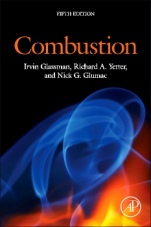
Combustion
ISBN 9780124079137
Autor: Glassman, IrvinYetter, Richard A.Glumac, Nick G.
Wydawca: Elsevier
Dostępność: 3-6 tygodni
Cena: 541,80 zł
Przed złożeniem zamówienia prosimy o kontakt mailowy celem potwierdzenia ceny.
ISBN13: |
9780124079137 |
ISBN10: |
012407913X |
Autor: |
Glassman, IrvinYetter, Richard A.Glumac, Nick G. |
Oprawa: |
Hardback |
Rok Wydania: |
2014-11-24 |
Tematy: |
PHH |
Throughout its previous four editions, Combustion has made a very complex subject both enjoyable and understandable to its student readers and a pleasure for instructors to teach. With its clearly articulated physical and chemical processes of flame combustion and smooth, logical transitions to engineering applications, this new edition continues that tradition. Greatly expanded end-of-chapter problem sets and new areas of combustion engineering applications make it even easier for students to grasp the significance of combustion to a wide range of engineering practice, from transportation to energy generation to environmental impacts.
Combustion engineering is the study of rapid energy and mass transfer usually through the common physical phenomena of flame oxidation. It covers the physics and chemistry of this process and the engineering applications—including power generation in internal combustion automobile engines and gas turbine engines. Renewed concerns about energy efficiency and fuel costs, along with continued concerns over toxic and particulate emissions, make this a crucial area of engineering.
New chapter on new combustion concepts and technologies, including discussion on nanotechnology as related to combustion, as well as microgravity combustion, microcombustion, and catalytic combustion—all interrelated and discussed by considering scaling issues (e.g., length and time scales)New information on sensitivity analysis of reaction mechanisms and generation and application of reduced mechanismsExpanded coverage of turbulent reactive flows to better illustrate real-world applicationsImportant new sections on stabilization of diffusion flames—for the first time, the concept of triple flames will be introduced and discussed in the context of diffusion flame stabilization
Combustion, 5th Edition
Dedication 01
Dedication 02
Preface
Chapter 1. Chemical thermodynamics and flame temperatures
1.1. Introduction
1.2. Heats of Reaction and Formation
1.3. Free Energy and the Equilibrium Constants
1.4. Flame Temperature Calculations
1.5. Sub and Supersonic Combustion Thermodynamics
Problems
Chapter 2. Chemical kinetics
2.1. Introduction
2.2. Rates of Reactions and Their Temperature Dependence
2.3. Simultaneous Interdependent Reactions
2.4. Chain Reactions
2.5. Pseudo-First-Order Reactions and the “Falloff” Range
2.6. The Partial Equilibrium Assumption
2.7. Pressure Effect in Fractional Conversion
2.8. Chemical Kinetics of Large Reaction Mechanisms
Problems
Chapter 3. Explosive and general oxidative characteristics of fuels
3.1. Introduction
3.2. Chain Branching Reactions and Criteria for Explosion
3.3. Explosion Limits and Oxidation Characteristics of Hydrogen
3.4. Explosion Limits and Oxidation Characteristics of Carbon Monoxide
3.5. Explosion Limits and Oxidation Characteristics of Hydrocarbons
3.6. The Oxidation of Aldehydes
3.7. The Oxidation of Methane
3.8. The Oxidation of Higher-Order Hydrocarbons
Problems
Chapter 4. Flame phenomena in premixed combustible gases
4.1. Introduction
4.2. Laminar Flame Structure
4.3. Laminar Flame Speed
4.4. Stability Limits of Laminar Flames
4.5. Flame Progagation through Stratified Combustible Mixtures
4.6. Turbulent Reacting Flows and Turbulent Flames
4.7. Stirred Reactor Theory
4.8. Flame Stabilization in High-Velocity Streams
4.9. Combustion in Small Volumes
Problems
Chapter 5. Detonation
5.1. Introduction
5.2. Detonation Phenomena
5.3. Hugoniot Relations and the Hydrodynamic Theory of Detonations
5.4. Comparison of Detonation Velocity Calculations with Experimental Results
5.5. The ZND Structure of Detonation Waves
5.6. The Structure of the Cellular Detonation Front and Other Detonation Phenomena Parameters
5.7. Detonations in Nongaseous Media
Problems
Chapter 6. Diffusion flames
6.1. Introduction
6.2. Gaseous Fuel Jets
6.3. Burning of Condensed Phases
6.4. Burning of Droplet Clouds
6.5. Burning in Convective Atmospheres
Problems
Chapter 7. Ignition
7.1. Concepts
7.2. Chain Spontaneous Ignition
7.3. Thermal Spontaneous Ignition
7.4. Forced Ignition
7.5. Other Ignition Concepts
Problems
Chapter 8. Environmental combustion considerations
8.1. Introduction
8.2. The Nature of Photochemical Smog
8.3. Formation and Reduction of Nitrogen Oxides
8.4. SOx Emissions
8.5. Particulate Formation
8.6. Stratospheric Ozone
Problems
Chapter 9. Combustion of nonvolatile fuels
9.1. Carbon Char, Soot, and Metal Combustion
9.2. Metal Combustion Thermodynamics
9.3. Diffusional Kinetics
9.4. Diffusion-Controlled Burning Rate
9.5. Practical Carbonaceous Fuels (C. R. Shaddix)
9.6. Soot Oxidation (C. R. Shaddix)
9.7. Catalytic Combustion
Problems
Appendixes
Appendix A: Thermochemical data and conversion factors
Appendix B: Adiabatic flame temperatures of hydrocarbons
Appendix C: Specific reaction rate constants
Appendix D: Bond dissociation energies of hydrocarbons
Appendix E: Flammability limits in air
Appendix F: Laminar flame speeds
Appendix G: Spontaneous ignition temperature data
Appendix H: Minimum spark ignition energies and quenching distances
Appendix I: Programs for combustion kinetics
Index
Koszyk
Książek w koszyku: 0 szt.
Wartość zakupów: 0,00 zł
Informacje


Kontakt
Gambit
Centrum Oprogramowania
i Szkoleń Sp. z o.o.
Al. Pokoju 29b/22-24
31-564 Kraków
Siedziba Księgarni
ul. Kordylewskiego 1
31-542 Kraków
+48 12 410 5991
+48 12 410 5987
+48 12 410 5989
Subskrypcje
Administratorem danych osobowych jest firma Gambit COiS Sp. z o.o. Na podany adres będzie wysyłany wyłącznie biuletyn informacyjny.
Autoryzacja płatności

Informacje na temat autoryzacji płatności poprzez PayU.

© Copyright 2012: GAMBIT COiS Sp. z o.o. Wszelkie prawa zastrzeżone.
Projekt i wykonanie: Alchemia Studio Reklamy