


Wydawcy
Katalog tematyczny
- Archeologia (109)
- Ekonomia, finanse, business (13704)
- Filozofia (1445)
- Historia (3040)
- Języki i językoznawstwo (2356)
- Lifestyle, hobby i rozrywka (475)
- Medycyna (9704)
- Nauki humanistyczne (4)
- Nauki o Ziemi i środowisku (2638)
- Nauki ścisłe (20412)
- Nauki społeczne (8486)
- Edukacja (229)
- Kryminologia, opieka spełeczna (284)
- Obronność (10)
- Polityka (1389)
- Psychologia (777)
- Socjologia (410)
- Społeczeństwo i kultura (187)
- Nauki techniczne (13450)
- Prawo (1696)
- Publikacje informacyjne i interdyscyplinarne (1288)
- Religia i wierzenia (917)
- Technika komputerowa (4067)
- Zdrowie, relacje międzyludzkie i rozwój osobisty (657)





Informacje szczegółowe o książce
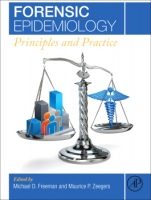
Forensic Epidemiology: Principles and Practice
ISBN 9780124045842
Autor: Freeman, MichaelZeegers, Maurice
Wydawca: Elsevier
Dostępność: 3-6 tygodni
Cena: 555,45 zł
Przed złożeniem zamówienia prosimy o kontakt mailowy celem potwierdzenia ceny.
ISBN13: |
9780124045842 |
ISBN10: |
0124045847 |
Autor: |
Freeman, MichaelZeegers, Maurice |
Oprawa: |
Hardback |
Rok Wydania: |
2016-05-09 |
Tematy: |
JKVF1 |
It is an inescapable fact that causation, both generally (in populations), and specifically (in individuals), cannot be observed. Rather, causation is determined when it can be inferred that the risk of an observed injury or disease from a plausible cause is greater than the risk from other plausible causes. While many causal evaluations performed in forensic medicine are simplified by the fact that the circumstances surrounding the onset of an injury or disease clearly rules out competing causes (eg, a death following a fall), there are many cases that present a more complicated picture. It is these types of investigations, in which an analysis of comparative levels of risk from competing causes is needed to arrive at a reliable and accurate determination of the most likely cause, that forensic epidemiology (FE) is directed at.
In Forensic Epidemiology, the authors present the legal and scientific theories underlying the methods by which risk is used in the investigation of individual causation. Methods and principles from epidemiology are combined with those from a multitude of other disciplines, including general medicine, pharmacology, forensic pathology, biostatistics, and biomechanics, inter alia, as a basis for investigating the plausibility of injury and disease exposures and mechanisms. The ultimate determination of the probability of causation (PC) results from an assessment of the strength of association of the investigated relationship in the individual, based on a comparison between the risk of disease or injury from the investigated exposure versus the risk of the same disease or injury occurring at the same point in time in the individual, but absent the exposure. The principles and methods described in Forensic Epidemiology will be of interest to those who work and study in the fields of forensic medicine, epidemiology, and the law.
Historical perspective on how epidemiologic evidence of causation has been used in courts in the US and EuropeTheory and science underlying the use of risk to assess individual causationPrimer on epidemiologic methods, and various measures used to arrive at individualized comparative risk assessments and PCThe use of statistical methods applied to publicly available data for ad hoc analysis of PC applicable to the specific circumstances of a caseBackground on complementary disciplines, including forensic pathology, death investigation, biomechanics, and survival analysisExamples of applied FE in the investigation of traffic injury and death, automotive and other product defect litigation, medical negligence, and criminal prosecution and defense
Dedication
List of Contributors
Introduction
Part I. Principles of Forensic Epidemiology
Chapter 1. Legal Considerations of Forensic Applications of Epidemiology in the United States
Historical Context of the Frye Standard
Prelude to the Federal Rules of Evidence
Enter the Federal Rules of Evidence
The Judicial Divide Interpreting the Federal Rules of Evidence
The Amended Federal Rules of Evidence
Daubert Jurisprudence Has Impacted the Frye Analysis
The Evolving Set of Daubert Factors
Further Legal Approaches to Forensic Epidemiology
Conclusion
Chapter 2. Epidemiologic Evidence in Toxic Torts
Introduction
Legal Issues Arising in Toxic Torts
Applying the Law of Factual Causation in Toxic Tort Cases
Using Epidemiology to Prove Causation
Judicial Treatment of Nonepidemiologic Causation Evidence
“Weight-of-the-Evidence”
Defenses
Special Types of Toxic Tort Litigation
The Future of Epidemiology in Toxic Torts
Conclusion
Chapter 3. Methods Used in Forensic Epidemiologic Analysis
What Is Epidemiology?
Research Methods to Investigate Causal Relationships
Factual Probability
Linking a Potential Causal Factor to Injury
Sources of Error in Epidemiologic Research
Multiple Concurrent Causes
The Hill Viewpoints
Test Accuracy
Bayesian Reasoning
Chapter 4. Causation in Epidemiology and Law
Background
Delimiting the Topic
What Is Causation?
What Epidemiological Evidence Says About Particular Causation
How Epidemiological Evidence Relates to Legal Standards of Proof?
Sources of Resistance to Using Epidemiological Evidence
Conclusion
Cases
Chapter 5. The Role of the Expert Witness
Introduction
Causal Uncertainty and the Expert
The Role of the Forensic Epidemiologist as an Expert
Is the Expert Always an Expert?
Remedies
Concluding Remarks
Part II. Auxiliary Forensic Disciplines
Chapter 6. Forensic Pathology
Introduction
Cause and Manner of Death
Difficulties in Determining the Cause and Manner of Death
Natural Deaths
Difficulties in Differentiating between Natural and Unnatural Death
Unnatural Deaths
Terminology of Common Wound Types
Chapter 7. Death Investigation
Introduction
History of the Development of Death Investigation Systems
The Coroner System
The Medical Examiner System
Fundamentals of Death Investigation
Functions of the Medical Examiner/Coroner Office
Manner of Death
Chapter 8. Injury Biomechanics
Introduction
Background
Types of Trauma
Biomechanics of Skin and Soft Tissue Injury
Biomechanical Properties of Bone and Fracture
Fracture Patterns
Fluid Mechanics
Impact Mechanics
Special Applications of Biomechanics in a Forensic Setting
Chapter 9. Biomechanical, Epidemiologic, and Forensic Considerations of Pediatric Head Injuries
Introduction
Biomechanics of Head and Brain Injury
Pediatric Head Injuries and Falls
Experimental Studies
Discussion
Chapter 10. Survival Analysis
Introduction
Definitions
Using Survival Analysis in a Forensic Setting
Survival Following a Spinal Cord Injury: An Example
Survival Models
Median Survival and the Confidence Interval
Simulation Study
Including Risk Factors and Severity Measures
Adjusting Existing Life Tables
Technical Appendix
Definitions
Variance of a Quantile
Part III. Applications of Forensic Epidemiology
Chapter 11. Traffic Injury Investigation
Introduction
Crash Injury Causation Methodology
Case Study Examples
Case Study #1: Seat Belt Efficacy Analysis
Case Facts
Attributable Risk Methodology for the Evaluation of Seat Belt Efficacy
Case-Specific Attributable Risk Analysis of Seat Belt Efficacy
Analysis of the Defendant Expert's Methods and Conclusions
Case Study #2: Lumbar Spinal Fracture Following a Low-Speed Crash
Case Facts
Causation Analysis
Case Study #3: Hip Replacement Surgery After a Traffic Crash
Case Facts
Causation Analysis
Case Study #4: Timing and Cause of Death
Conclusion
Chapter 12. Traffic Injury Investigation: Product Defects
Introduction
Case Study #1: Airbag Failure-Related Comparative Death Risk Analysis
Case Study #2: Roof Crush-Related Neck Injury Risk Analysis
Case Study #3: Seat Belt Latch Failure-Related Injury Pattern Risk Analysis
Conclusion
Chapter 13. Product Defect/Liability Investigation
Introduction
Case Study #1: Infant Sleep Positioner Death Investigation
Case Study #2: Window Blind Strangulation Investigation
Chapter 14. Medical Negligence Investigation
Introduction
Steps to Performing a Comparative Risk Ratio Causal Assessment in a Medical Negligence Investigation
Case Study #1: Locked-In Syndrome Following the Alleged Failure to Treat an Acute Ischemic Stroke With Thrombolytic Therapy (Tissue Plasminogen Activator) in a 28-Year-Old Male
Case Study #2: Manipulation of the Cervical Spine Followed by Vertebral Artery Dissection and Stroke Resulting in Permanent Paralysis
Case Study #3: Failure to Timely Diagnose and Treat a Neurologic Complication of Meningitis Resulting in Spinal Cord Stroke and Paralysis
Case Study #4: Cardiomyopathy Following Exposure to Doxorubicin
Discussion
Chapter 15. Criminal Investigation
Introduction
Case Study #1: Identification of the Seating Position (Driver vs Passenger) of an Ejected Occupant in a Vehicular Homicide Investigation
Case Study #2: Motorcycle Versus Pedestrian: Speed at Impact Investigation
Impact Speed Analysis
Case Study #3: Accidental Versus Intentional Head Injury in a Toddler
Case Study #4: Fetal Death Following Maternal Cocaine Ingestion
Glossary
Author Index
Subject Index
Koszyk
Książek w koszyku: 0 szt.
Wartość zakupów: 0,00 zł
Informacje


Kontakt
Gambit
Centrum Oprogramowania
i Szkoleń Sp. z o.o.
Al. Pokoju 29b/22-24
31-564 Kraków
Siedziba Księgarni
ul. Kordylewskiego 1
31-542 Kraków
+48 12 410 5991
+48 12 410 5987
+48 12 410 5989
Subskrypcje
Administratorem danych osobowych jest firma Gambit COiS Sp. z o.o. Na podany adres będzie wysyłany wyłącznie biuletyn informacyjny.
Autoryzacja płatności

Informacje na temat autoryzacji płatności poprzez PayU.

© Copyright 2012: GAMBIT COiS Sp. z o.o. Wszelkie prawa zastrzeżone.
Projekt i wykonanie: Alchemia Studio Reklamy