


Wydawcy
Katalog tematyczny
- Archeologia (109)
- Ekonomia, finanse, business (13704)
- Filozofia (1445)
- Historia (3040)
- Języki i językoznawstwo (2356)
- Lifestyle, hobby i rozrywka (475)
- Medycyna (9704)
- Nauki humanistyczne (4)
- Nauki o Ziemi i środowisku (2638)
- Nauki ścisłe (20412)
- Nauki społeczne (8486)
- Nauki techniczne (13450)
- Budownictwo lądowe (1045)
- Chemia przemysłowa (2258)
- Elektronika i telekomunikacja (3287)
- Energetyka (1122)
- Inne nauki stosowane (363)
- Inżynieria biochemiczna (507)
- Inżynieria transportu (232)
- Mechanika i materiały (3316)
- Nauka o środowisku (321)
- Rolnictwo (507)
- Technika, ogólnie (475)
- Prawo (1696)
- Publikacje informacyjne i interdyscyplinarne (1288)
- Religia i wierzenia (917)
- Technika komputerowa (4067)
- Zdrowie, relacje międzyludzkie i rozwój osobisty (657)





Informacje szczegółowe o książce
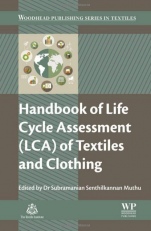
Handbook of Life Cycle Assessment (LCA) of Textiles and Clothing
ISBN 9780081001691
Autor: Muthu, Subramanian Senthilkannan
Wydawca: Elsevier
Dostępność: 3-6 tygodni
Cena: 1 014,30 zł
Przed złożeniem zamówienia prosimy o kontakt mailowy celem potwierdzenia ceny.
ISBN13: |
9780081001691 |
Autor: |
Muthu, Subramanian Senthilkannan |
Oprawa: |
Paperback |
Rok Wydania: |
2015-07-27 |
Tematy: |
TDH |
Life cycle assessment (LCA) is used to evaluate the environmental impacts of textile products, from raw material extraction, through fibre processing, textile manufacture, distribution and use, to disposal or recycling. LCA is an important tool for the research and development process, product and process design, and labelling of textiles and clothing. Handbook of Life Cycle Assessment (LCA) of Textiles and Clothing systematically covers the LCA process with comprehensive examples and case studies.
Part one of the book covers key indicators and processes in LCA, from carbon and ecological footprints to disposal, re-use and recycling. Part two then discusses a broad range of LCA applications in the textiles and clothing industry.
Covers the LCA process and its key indicators, including carbon and ecological footprints, disposal, re-use and recyclingExamines the key developments of LCA in the textile and clothing industriesProvides a wide range of case studies and examples of LCA applications in the textile and clothing industries
- The Textile Institute and Woodhead Publishing
- List of contributors
- Woodhead Publishing Series in Textiles
- Introduction
- Part One. Key indicators and processes in LCA
- 1. Carbon footprints in the textile industry
- 1.1. Introduction
- 1.2. Key issues in calculating carbon footprints
- 1.3. Carbon footprint standards
- 1.4. Calculating carbon footprints of textile manufacturing processes
- 1.5. Calculating carbon footprints of textile products
- 1.6. Carbon footprint labelling of textile products
- 1.7. Future trends
- 1.8. Conclusions
- 1.9. Further information and advice
- 2. Energy footprints in the textile industry
- 2.1. Introduction: key issues in calculating energy footprints
- 2.2. Methodologies and standards
- 2.3. Calculating energy footprints of textile products (applications and examples)
- 2.4. How to reduce energy footprint in textile and clothing products
- 2.5. How to reduce energy footprint in textile and clothing supply chain
- 2.6. Energy analysis in the textile industry
- 2.7. Energy analysis from the view of environmental approaches
- 2.8. Future trends
- 2.9. Conclusions
- 2.10. Additional readings about energy in the textile industry
- 3. Ecological footprints in the textile industry
- 3.1. Introduction
- 3.2. Methodologies and standards
- 3.3. Calculating ecological footprint of a textile manufacturing plant
- 3.4. Calculating ecological footprints of textile products: evaluation of footwear as case study
- 3.5. Future trends and challenges in calculating the EF of textile products
- 3.6. Conclusions
- 4. Measuring the reusability of textile products
- 4.1. Introduction
- 4.2. Importance of reusability in LCA
- 4.3. Implications of reusability in textiles and clothing products
- 4.4. Importance of reusability in LCA studies
- 4.5. Quantification of reusability of textiles and clothing products
- 4.6. Future trends and remarks
- 4.7. Conclusions
- 5. Environmental impacts of the use phase of the clothing life cycle
- 5.1. Introduction: the use phase in the life cycle of clothing
- 5.2. Quantifying the use phase of the clothing life cycle
- 5.3. Consumer use phase in LCA studies of textiles and clothing products – implications for LCA
- 5.4. Challenges and conclusions
- 6. Open- and closed-loop recycling of textile and apparel products
- 6.1. Introduction
- 6.2. Recycling textiles and apparel
- 6.3. Open-loop recycling
- 6.4. Closed-loop recycling
- 6.5. Barriers to effective OLR and CLR
- 6.6. Future trends in the apparel industry
- 6.7. Conclusion
- List of abbreviations
- 7. Life cycle assessment method for environmental impact evaluation and certification systems for textiles and clothing
- 7.1. Introduction
- 7.2. Life cycle assessment and environmental impacts of textiles and clothing
- 7.3. Standards and associations for environmental management systems
- 7.4. Eco-labelling and certification of textiles and clothing
- 7.5. Conclusions
- 8. Environmental impact assessment methods for textiles and clothing
- 8.1. Introduction
- 8.2. Review of EIA process and methods
- 8.3. An EIA tool kit for the textile and clothing industry: the SustainTex system
- 8.4. Illustrative example
- 8.5. Conclusions and future trends
- 1. Carbon footprints in the textile industry
- Part Two. Applications of LCA in the textile industry
- 9. Life cycle assessment of cotton textiles and clothing
- 9.1. Introduction
- 9.2. LCA of cotton textiles
- 9.3. LCA of technical cotton textiles
- 9.4. Discussion of LCA results
- 9.5. Factors influencing sustainability of cotton textiles
- 9.6. Conclusions
- 10. LCA of wool textiles and clothing
- 10.1. Introduction
- 10.2. Wool LCA methodological and data challenges
- 10.3. LCA case study for wool apparel
- 10.4. Summary and future developments in wool LCA studies
- 11. Life cycle assessment of silk production – a case study from India
- 11.1. Introduction
- 11.2. LCI of Indian silk
- 11.3. Results and discussion
- 11.4. Conclusions
- 12. Comparative life cycle assessment of natural and man-made textiles
- 12.1. Introduction
- 12.2. Natural and man-made textiles
- 12.3. LCA studies
- 12.4. Concluding remarks
- 13. LCA of cotton shopping bags
- 13.1. Introduction
- 13.2. Shopping bags and their environmental impacts
- 13.3. Cotton shopping bags
- 13.4. LCA studies on cotton shopping bags
- 13.5. Conclusions
- 14. LCA of fibre-reinforced composites
- 14.1. Introduction
- 14.2. Types of fibre-reinforced composites
- 14.3. LCA method and models
- 14.4. LCA of composites made out of different materials: examples and case studies
- 14.5. Conclusions
- 15. Life cycle assessment and the environmental and social labels in the textile and clothing industry
- 15.1. Environmental and social labels: definitions
- 15.2. Classifications of social and environmental labels
- 15.3. Life cycle assessment and greenwashing in textiles and clothing
- 15.4. A comparison of the selected environmental and social labels in terms of LCA
- 15.5. The utility of environmental and social labels for consumers – barriers and challenges
- 15.6. Future trends and concluding remarks
- 16. Clothing disposal habits and consequences for life cycle assessment (LCA)
- 16.1. Introduction
- 16.2. Methods
- 16.3. Results
- 16.4. Discussion
- 16.5. Conclusions
- 9. Life cycle assessment of cotton textiles and clothing
- Index
Koszyk
Książek w koszyku: 0 szt.
Wartość zakupów: 0,00 zł
Informacje


Kontakt
Gambit
Centrum Oprogramowania
i Szkoleń Sp. z o.o.
Al. Pokoju 29b/22-24
31-564 Kraków
Siedziba Księgarni
ul. Kordylewskiego 1
31-542 Kraków
+48 12 410 5991
+48 12 410 5987
+48 12 410 5989
Subskrypcje
Administratorem danych osobowych jest firma Gambit COiS Sp. z o.o. Na podany adres będzie wysyłany wyłącznie biuletyn informacyjny.
Autoryzacja płatności

Informacje na temat autoryzacji płatności poprzez PayU.

© Copyright 2012: GAMBIT COiS Sp. z o.o. Wszelkie prawa zastrzeżone.
Projekt i wykonanie: Alchemia Studio Reklamy